Early this Monday morning U.S. Central Time the IES Abroad website will undergo scheduled maintenance. During this time some or all features of the site - like login and account creation - may be unavailable, but we expect this disruption to be brief. Thank you for your patience.
Study abroad in Tokyo to experience Japanese culture and have the adventure of a lifetime. Explore centuries-old temples, gardens, and castles that are only minutes from ultra-modern skyscrapers, electronics stores, and haute couture fashion centers. Dine on sushi and tempura, attend a sumo match or a baseball game, and learn tea ceremony, karate, or breakdancing. The Tokyo study abroad experience has something for everyone.
Study in Makuhari
Take classes taught by international faculty.
Live with the Locals
Live in a residence hall.
Field Observations
Students can observe local organizations and reflect on their experience.
Tokyo Will Be Your Classroom
Apply your lessons when you explore popular local sites.
Program Advisor
Sarah Duran
Once you’ve applied for a program, I’ll be your direct point of contact. From housing to course registration and everything in between, I’m here to help you prepare to study abroad. Once you’re accepted to your program, you’ll find even more detailed information about what you need to know before you depart in your Predeparture Guide. Let’s get started!
Tokyo is a city uniquely its own. It can appear straight from the future with its ultramodern skyscrapers, bright lights, and technology. Mix that with well-maintained and cherished traditions, like tea ceremony, festivals, and kimonos still worn in the streets, and you have a glimpse of Tokyo. Explore all of this and more in this one-of-a-kind city while living and attending classes in Chiba, just a train ride away from both the bustling city center as well as the vast and peaceful countryside.
Walk across one of the most recognizable pedestrian crossings in the world!
Hike Mount Takao
And take a day trip away from the hustle and bustle of Tokyo.
Experience the Harajuku District
Enjoy this trendy fashion and shopping district.
Spend a Day on Odaiba
Walk across Tokyo Bay on the striking Rainbow Bridge.
Tokyo Newsletters
Get a taste for what it's really like to study abroad. The IES Abroad Tokyo Center regularly sends out a newsletter called the Tokyo Shinbun. To see students experiencing the city, read through the latest volumes.
Our mission is simple: to provide you with the best study abroad program possible—which includes the highest quality academic and cultural experiences. That is why we partnered with Musashi University.
Partner Institution
Musashi University
Musashi University
Founded in 1949, Musashi University is a private university dedicated to academic excellence in
Musashi University is located in Nerima Ward on the northwest side of Tokyo, about a 90-minute train ride from the IES Abroad Tokyo Center. The university campus is located in a quiet residential area about twenty minutes from Ikebukuro and Shinjuku. Commute times will vary based on the location of your housing option. Expect commute times to range between 30-90 minutes.
Create your own academic experience by enrolling in 15 to 19 credits at Musashi University. Students will have access to courses in the East Asian Studies Program, which can vary from semester to semester. Complete and up-to-date courses offerings can be found on the East Asian Studies Program webpage.
*Musashi University reserves the right to cancel a course due to insufficient enrollment or circumstances beyond its control.
3.0 cumulative GPA or better on a 4.0 scale (GPAs between 2.99 and 2.75 on a 4.0 scale will be considered on a case-by-case basis. Students with a GPA below 2.75 are ineligible)
Must be currently enrolled in a four-year degree granting institution
Sophomore, Junior, or first-semester Senior standing when program begins. Neither graduating second-semester Seniors nor college graduates are eligible for this program
Prior Japanese language knowledge is not required for the program but is strongly recommended; all students must have strong knowledge of hiragana and katakana alphabets before the program begins
This is a competitive program. Applicants will be selected based on an overall evaluation of their application and the comparative qualifications of other applicants.
Application Requirements
Submit Your Online Application
Applications may be considered after the published deadline on a space available basis. Please note that late applicants may be required to submit a non-refundable confirmation deposit upon acceptance in order to secure a place in the program. Please contact us with questions about applying after the deadline.
After your Online Application is processed, submit the following in your MyIESabroad account:
Home School Authorization — Your on-campus study abroad advisor can either complete the Home School Authorization electronically through IES Abroad’s PartnerPortal system, or by filling out the PDF form. Consult your study abroad advisor to determine how they would prefer to complete your Home School Authorization.
Transcript(s) — Include a transcript for each college/university you have attended since high school. If you have multiple transcripts, IES Abroad will average the GPAs for all colleges/universities you have attended and use that cumulative GPA when reviewing your application. (Students attending higher education institutions outside of the U.S. must obtain a professional course-by-course transcript equivalency report. You may choose any organization that provides professional international transcript equivalencies.)
Color Copy of Your Passport — Submit a copy of the signature page and photo page only showing that your passport is valid at least 6 months beyond the program end date. Must have a valid passport at the time of application.
Foreign Language Assessment or Independent Language Questionnaire — Fill out and sign the top portion of the PDF form and give the assessment form to a college-level language professor who has taught you in the target language. If you have not taken Japanese, you will be asked to complete the Japanese Language Questionnaire found in your MyIESabroad account.
Official Financial Support Letter— This must be from a bank or your school's Financial Aid Office stating that you have sufficient funds to study in Japan for your program's duration. More information on this can be found in your MyIESabroad account.
Passport-Style Photos— These must be recent and taken professionally. More information on photo requirements can be found in your MyIESabroad account.
If your cumulative GPA is below 3.0, submit the following in your MyIESabroad account:
Professor Recommendation —Although there is no length requirement, the recommendation must indicate a professor’s opinion of the applicant’s academic ability to pursue university-level coursework in a foreign country, in addition to any information that would help IES Abroad gain a better understanding of the applicant.
Personal Academic Essay— Although there is no length requirement, the essay must address your GPA, any particular academic challenges faced, reasons you chose this IES Abroad program, and how it fits into your academic career.
The Center is where our highly trained local staff provide on-the-ground support throughout your time abroad.
The IES Abroad Tokyo Center is located in Makuhari, a modern city in Chiba prefecture, which is in the Greater Tokyo Area. Easily accessible by public transportation, the Center is your study abroad hub.
IES Abroad Tokyo Staff
Caleb Foale
IES Abroad Tokyo Center Director & APAC Cluster Dean
Field Placement Program, Homestay & Customized Programs Coordinator
Risa Katori
Student Affairs Coordinator
Hyung-Hye Lee
Student Affairs Manager
Daiji Shin
Associate Director
Natsuko Takahashi
Administrative Assistant
Theresa Wanner
Student Success Coordinator
Asako Nemoto
Customized Program Assistant / External Outreach Coordinator
Housing
Housing in Tokyo
IES Abroad Tokyo
Housing in Tokyo
We will secure housing for you prior to your arrival in Tokyo. We locate and contract housing for students every term that meets our high standards for health and safety while simultaneously increasing student understanding of the local culture. Housing options provided vary by term and location but may include hotel, residence hall, and/or apartment housing.
We recognize how important housing is to students and their families, and we aim to provide all the information needed to ensure confidence and clarity before arrival.
Please continue to monitor this page for the most up-to-date housing information for the Tokyo - Musashi Program!
Field Trips
Even though your adventure starts in Tokyo, our field trips take you beyond the city to discover the culture and traditions of your host country. All trips are included in the program fee unless otherwise noted with ($).
Musashi University may also offer additional trips and tours each term which could incur additional fees.
NOTE: IES Abroad field trip destinations, activities, and lengths of stay may vary according to term and availability.

Tokyo City Tour
1 Day
Fall & Spring
From exploring Sensoji, one of the city’s most popular temples, to encountering the contemporary areas such as Odaiba and the Tokyo Tower, there is much to experience in this metropolis. Come discover the traditional and modern parts of Tokyo.
Program Cost
Consider these prices as a starting point. We encourage you to contact your current college or university to determine the actual cost to you when factoring in financial aid, scholarships, your school's policies, and other factors.
APPLY FOR SCHOLARSHIPS
$7 Million in Scholarships & Aid
We firmly believe that financial limitations should not prevent a qualified student from studying abroad. This is why we commit millions of dollars to our study abroad scholarships and aid.
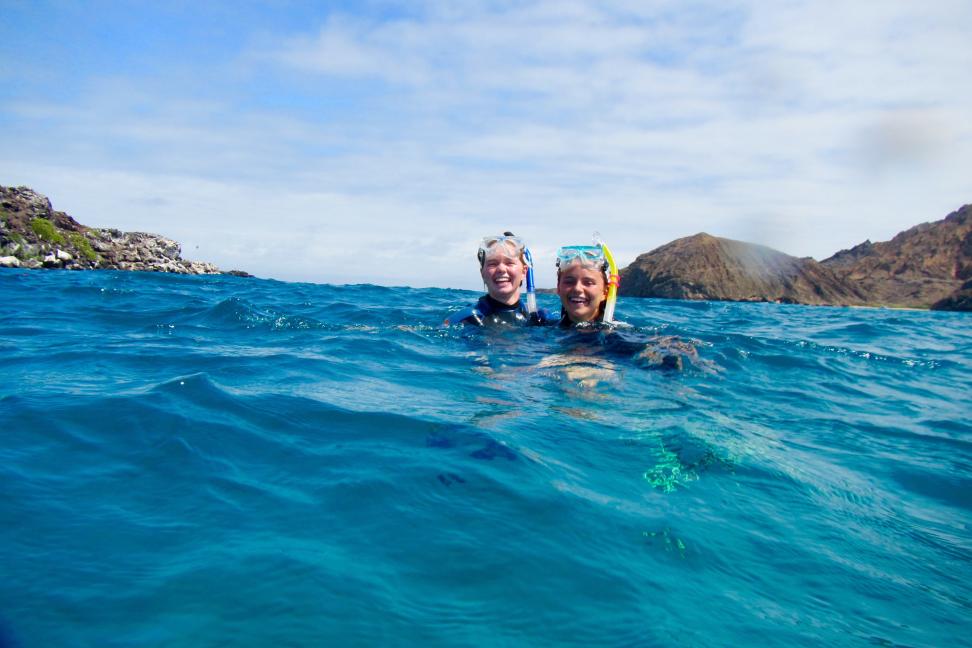
Orientation continues upon arrival. Participate in mandatory orientation sessions with additional academic and student life information to enhance your success abroad.
Get to Know the City
Beyond orientation sessions, you will have opportunities to explore and discover Tokyo before classes start to help you feel at home in your new environment.
Prepare to Learn
Feel prepared to begin classes with practical lessons, activities designed to help you learn your way around the area, and support from our dedicated student volunteers.
Settle In
Orientation continues throughout the semester with field trips allowing you to both further sample elements of Japanese culture and get to know the other students.
Health & Safety
With 75 years of experience, we are proud to set the standard for health and safety in study abroad. Our Chicago-based and on-site staff are all highly trained and experienced in the matters of health, safety, and crisis management. We are here for you from predeparture to your return, and are ready to support you—no matter which time zone you’re in. We plan for "what ifs" so that you don’t have to. From international health insurance included in your program cost to highly trained local staff who can connect you with English-speaking healthcare providers, we work around the clock to ensure your health and safety while abroad.
Support You Can Expect to Receive on Our Programs
Background Image Mask
CISI International Health Insurance
In the case you need to see a doctor or mental health professional.
Background Image Mask
24/7 Emergency Support
Whether you encounter an issue while traveling or in your host city.
Background Image Mask
Mandatory Cell Phone Policy
Receive any emergency updates from IES Abroad staff via call or text.
Background Image Mask
Location-Specific Information
Health and safety information presented at orientation by on-site staff.
Background Image Mask
TripTracker System
Allowing you to share independent travel plans.
Background Image Mask
Crisis Drills
So that you feel prepared to respond to an emergency should one arise.
Getting your passport is a crucial step for studying abroad. With processing times taking longer than usual, consider this a gentle reminder to not procrastinate on getting or renewing your passport.

Students who wish to participate in an IES Abroad program will typically apply to both their college/university, as well as to IES Abroad. Start by visiting your school’s study abroad office website to learn more about their application process and deadlines. Note that some university’s deadlines can be as early as one year before your desired term abroad. After you have reviewed the process at your home school, start your online application on the IES Abroad website—there's no application fee! Once we create an account for you, we’ll then ask you to submit the required admissions forms in your MyIESabroad account. After we have received all of your materials, we will review your application and send you an admission decision via email.
As soon as you know you are interested in going abroad, begin applying for your passport. In order to go abroad, you’ll need to have a passport that is valid until at least six months after your program’s end date. For most of our programs, you will need your passport in-hand in order to apply for the required student visa. Rest assured, our IES Abroad Program Advisors will be available to help you every step of the way, but it’s in your best interest to start this process as soon as possible!
You can find a list of the potential courses and/or internship opportunities available for students to pursue under the Academics tab of your program page. Syllabi for each course can typically be found by clicking on the hyperlinked course title, which you can review with your on-campus advisors to ensure that you can earn credit and stay on track for graduation. If a part-time internship opportunity is available on your program and something you want to pursue, discuss the possibility of earning credit for this with your study abroad office on-campus.
You can apply for our IES Abroad Scholarships at any point before the deadline—even if you haven’t yet been admitted into one of our programs! Our scholarship opportunities are competitive, so it’s in your best interest to apply for our scholarships as early as possible. If you’d like to use your existing scholarships/aid towards your program fees, this will depend on your school’s policies and how you’re billed for the program. Talk to your school’s study abroad and financial aid office to learn their policies.
IES Abroad works as a partner to campus study abroad offices around the world to provide high quality academic programs for undergraduate students. In order to participate in one of our programs, we require that you gain approval from your home school’s study abroad office. While IES Abroad is here to help with your predeparture needs, you’ll also want to stay connected with your study abroad advisor on-campus to ensure you’re staying on track with their deadlines and aware of their policies for your program abroad.
The location of your courses will depend on the type of IES Abroad program that you select. Most IES Abroad programs are based at the IES Abroad Center in the host city. Our Centers are physical spaces within the city where we have staff offices and classrooms and they serve as the student hub for many of our programs. On these programs, your classmates will be other IES Abroad students from U.S. campuses and are taught by local or international professors. In some cases, it may also be possible to take one or two courses at a local university and the rest at the IES Abroad Center. Alternatively, some IES Abroad programs are direct enrollment programs, which means that you will take all of your classes at the local university alongside other students enrolled at that university.
IES Abroad places student health & safety at the forefront of all that we do. All IES Abroad students are required to be insured under our mandatory CISI health insurance policy, and this cost is factored into your program fees. Students will be expected to complete a physical within the six months prior to your departure so that our student affairs staff on-site have up-to-date information and can offer support for any health or medical needs you may have while abroad. Mental health services may be available for students upon request. Please discuss any specific health and safety needs with our Dean of Students’ office as early as possible. You can also read more information about our Health & Safety protocols (including COVID-19).
Our experienced housing coordinators work hard to screen and place students in IES Abroad housing, so you won’t need to find your housing on your own. Options can include homestays (highly rated!), residence halls, or apartments depending on your location. You will be given an opportunity to indicate any preferences you may have for housing once you are admitted into the program, which our staff will take into consideration to the best of their ability as they are making arrangements for students. While it’s not recommended, it is possible for you to arrange your own housing abroad if your home school approves you to do so.
Students who wish to participate in an IES Abroad program will typically apply to both their college/university, as well as to IES Abroad. Start by visiting your school’s study abroad office website to learn more about their application process and deadlines. Note that some university’s deadlines can be as early as one year before your desired term abroad. After you have reviewed the process at your home school, start your online application on the IES Abroad website—there's no application fee! Once we create an account for you, we’ll then ask you to submit the required admissions forms in your MyIESabroad account. After we have received all of your materials, we will review your application and send you an admission decision via email.
IES Abroad works as a partner to campus study abroad offices around the world to provide high quality academic programs for undergraduate students. In order to participate in one of our programs, we require that you gain approval from your home school’s study abroad office. While IES Abroad is here to help with your predeparture needs, you’ll also want to stay connected with your study abroad advisor on-campus to ensure you’re staying on track with their deadlines and aware of their policies for your program abroad.
As soon as you know you are interested in going abroad, begin applying for your passport. In order to go abroad, you’ll need to have a passport that is valid until at least six months after your program’s end date. For most of our programs, you will need your passport in-hand in order to apply for the required student visa. Rest assured, our IES Abroad Program Advisors will be available to help you every step of the way, but it’s in your best interest to start this process as soon as possible!
The location of your courses will depend on the type of IES Abroad program that you select. Most IES Abroad programs are based at the IES Abroad Center in the host city. Our Centers are physical spaces within the city where we have staff offices and classrooms and they serve as the student hub for many of our programs. On these programs, your classmates will be other IES Abroad students from U.S. campuses and are taught by local or international professors. In some cases, it may also be possible to take one or two courses at a local university and the rest at the IES Abroad Center. Alternatively, some IES Abroad programs are direct enrollment programs, which means that you will take all of your classes at the local university alongside other students enrolled at that university.
You can find a list of the potential courses and/or internship opportunities available for students to pursue under the Academics tab of your program page. Syllabi for each course can typically be found by clicking on the hyperlinked course title, which you can review with your on-campus advisors to ensure that you can earn credit and stay on track for graduation. If a part-time internship opportunity is available on your program and something you want to pursue, discuss the possibility of earning credit for this with your study abroad office on-campus.
IES Abroad places student health & safety at the forefront of all that we do. All IES Abroad students are required to be insured under our mandatory CISI health insurance policy, and this cost is factored into your program fees. Students will be expected to complete a physical within the six months prior to your departure so that our student affairs staff on-site have up-to-date information and can offer support for any health or medical needs you may have while abroad. Mental health services may be available for students upon request. Please discuss any specific health and safety needs with our Dean of Students’ office as early as possible. You can also read more information about our Health & Safety protocols (including COVID-19).
You can apply for our IES Abroad Scholarships at any point before the deadline—even if you haven’t yet been admitted into one of our programs! Our scholarship opportunities are competitive, so it’s in your best interest to apply for our scholarships as early as possible. If you’d like to use your existing scholarships/aid towards your program fees, this will depend on your school’s policies and how you’re billed for the program. Talk to your school’s study abroad and financial aid office to learn their policies.
Our experienced housing coordinators work hard to screen and place students in IES Abroad housing, so you won’t need to find your housing on your own. Options can include homestays (highly rated!), residence halls, or apartments depending on your location. You will be given an opportunity to indicate any preferences you may have for housing once you are admitted into the program, which our staff will take into consideration to the best of their ability as they are making arrangements for students. While it’s not recommended, it is possible for you to arrange your own housing abroad if your home school approves you to do so.
No one knows the IES Abroad experience better than a student who has lived it! From budget tips to housing experiences, our volunteer Ambassadors are here to share it all.

Blog Summary:
Morocco is a constitutional monarchy on paper – the king holds a lot of power
Protests happen and they can be dangerous
The effects of these...