

As of today, I have been home for about a week and a half. It’s at the same time the weirdest and most normal thing ever. I used the word “uncanny” in one of my early blogs to characterize the feeling of being in New Zealand, but now I realize that wasn’t right. This is what’s uncanny, coming back to a place that is deeply familiar but somehow, now, has some strange and unfamiliar resonance. It strikes you differently now; something is not right. It’s hard to explain. It’s uncanny.
When I was entering the jet bridge, for my flight out of Christchurch, there were tears in my eyes. It’s hard to name what exactly I was even crying for. I was not focused on coming home, only on the end of everything. When I landed in Houston, TX, the immediate way I could tell I was no longer in New Zealand was by the way everything smelled. It wasn’t the smell of anything in particular; it was just some viscerally familiar, ancient smell, embedded in my sensory memory. I remembered that on my flight to Christchurch, I had sat next to another American who was going to Aotearoa for graduate study. She had told me that her dad said that the way you knew you had made it home was by smell, and that smell was the most primal of the senses: the one most attached to place and emotion and memory. Landing in America, I saw that he was right. And I liked that circular moment—how, at the end of my semester abroad, I was revisiting its beginning.
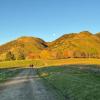
One of the things I am most nostalgic for is how, in Aotearoa, I suddenly found so much hope. There was hope that I didn’t have to be who I had always been: I could try new hobbies, meet new people, and feel like I was striding forward through life, shaking up the stagnation that had settled over my almost three years at the same university. I was always into hiking and the outdoors in an abstract sense. I would hike occasionally, and I saved to my phone videos of beautiful landscapes that I found on social media. But it’s only been through talking to some of my friends from home, and hearing them mention how I’m “into hiking now,” that I realize that, before New Zealand, I really had no claim to being a ‘hiker.’ In Aotearoa, the landscape is so beautiful, and so relevant to daily life and culture, that almost everyone you meet tramps at least occasionally. I think it was a wonderful place to get into tramping and other outdoor sports. I almost worry that it will be difficult to come from an introduction to tramping in New Zealand, where the landscape is internationally revered, to a continuation of hiking here in America.
And, in Aotearoa, I found new ways of seeing the world. Often, when I’d just be coming back from a weekend in the mountains, tucked away among breathtaking nature, I would look at all the concrete around campus, and it would be hard to see the urban landscape as anything other than ravaged. Through my outdoor adventures, I developed a heightened awareness to the environment. I came to realize that even when we are in a more developed landscape, surrounded by roads and buildings, we are still living on Earth, still living in the environment. I feel that, in the U.S., we have become so disconnected from the environment that we make a distinction between the earth and ourselves. There is nature—wild, untamed places we might occasionally escape into—and there is the rest, our places of living and work, which are so swallowed up by human artefact that we forget that they were ever anything else. But we can’t escape the earth, because that is our place of living, and with everything that we impose on it, the earth responds.
I’m already having trouble reconciling what I experienced in NZ with American life. New Zealand granted legal personhood to the Whanganui River in 2017; New Zealand has made efforts to connect with its original entity, Aotearoa, and to honor its indigenous language and culture; and New Zealand, as a whole, seems to ask questions around our place, especially our place on the earth (relevant generally, and particularly in a colonized country). Where is all that in America? Though I know New Zealand is not perfect, and many people, particularly Māori, fought hard to effect those movements, I can’t help but feel that the country offers us much to learn.
I don’t want to say goodbye to New Zealand quite yet, because I would like to go back. But maybe I won’t. It started to strike me near the end of my time in NZ, and it strikes me now, that a semester really is not a long time. It felt like, near the end of the five months, I had just started to settle in, just began integrating myself into some of the social networks at UC, just found the timbre of that rugged country. I invested so much time into knowing New Zealand, and found real joy in the process, but now it seems I am supposed to forget.
Or am I? Sometimes I think I really need to start writing down everything I can remember now, because it already feels like my time there is slipping away, vanishing into a distant dream. At the same time, it is a dream that lingers, and repeats, and changes, dancing around the edges of the day and possessing me at night. In my last couple weeks abroad, there was so much I wanted to do, so many nostalgic places to revisit, but there wasn’t the time. Somehow, time, which I thought had lain ahead of me in such abundance at the start of the semester, had just shriveled up and shrunk away. However, one thing I did want to see, the kiwi bird, ended up fitting into the schedule of my very last day in Aotearoa. A couple hours before I needed to be at the airport, I took a bus up to the Willowbank Wildlife Reserve and saw three kiwis in their nocturnal display house. I remember each of their three distinct personalities: our little spy, who stole quickly across its enclosure with its tumbling, bouncy gait, the movie star, who wandered toward the streams of red light and toward its human visitors, and the quiet one, who I imagined to be like a sensitive child, and who minded its business, moving slowly and softly and extracting food with diligence. I remember their long, skinny beaks, like dowels, and I remember their small, sweet heads. That is what you hold onto. I remember so many moments from New Zealand where I it seemed that something completely novel and incredible was unfurling before me. I remember, also, the subtle banality that crept in—how it felt to wake up every morning in New Zealand and have the sense that there were a million mornings like this ahead of you.
In any case, that is how I comfort myself, and how I make sense of things. Yes—I remember.
More Blogs From This Author


One Last Dance: The North Island
In my last blog before I leave New Zealand, I detail one final trip: a short exploration of the North Island.


Tess Enemark
A fun fact about me: I play the French horn! Other hobbies of mine include playing ultimate frisbee, baking, and swimming. I especially love reading and writing, and currently major in English & Creative Writing in Georgia, USA.


