

Blog Summary:
- Most host families will not speak any English
- Prioritize self-advocacy and communication in your relationship with your host family
- Some students may live with another IES Abroad student
- All students will live in Rabat’s Old Medina and will be relatively close to one another
- Properly communicate any allergies or food sensitivities you have (especially when it comes to nuts)
- A vegetarian or vegan lifestyle is difficult to maintain in Morocco
- You may find yourself craving other cuisines as Moroccan cuisine is by far the most common
As I stated before most host families will not speak English and while the majority will know French there are some who only speak Arabic. Once again this should not deter you from studying in Morocco as pantomiming and translation services exist but you should consider your comfort level, as well, since you will be living with these individuals for three months. I am very grateful as both my host family in Meknes and Rabat have been wonderful and we jive quite well together. Though you must remember that the only person who knows what you need is you, so you need to be able to advocate for yourself if something is not right either to your host family or IES Abroad.
Alongside my host family, I also happen to be living with another IES Abroad student. We have our own rooms which are mirror images of each other and we still have distinct relationships with the members of our host families. I have greatly enjoyed having another student in the house with me because I am generally more introverted and the other student is more extroverted so we balance each other out quite well. My peers have had little to no problems living without another IES Abroad student, so I believe the deciding factor for whether or not you should opt to live with another IES Abroadstudent is how many people you want to live in your house.
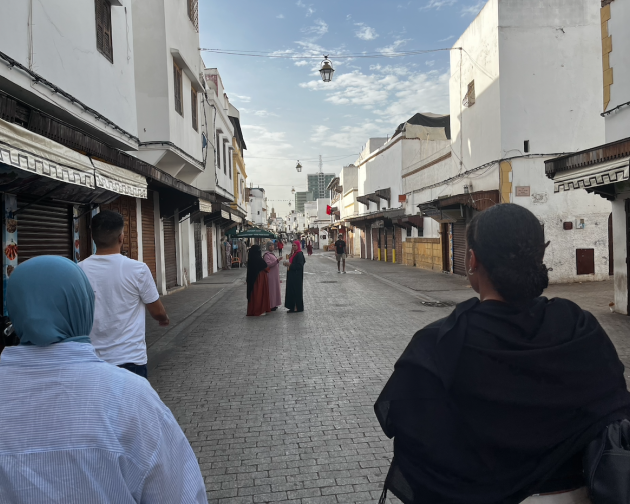
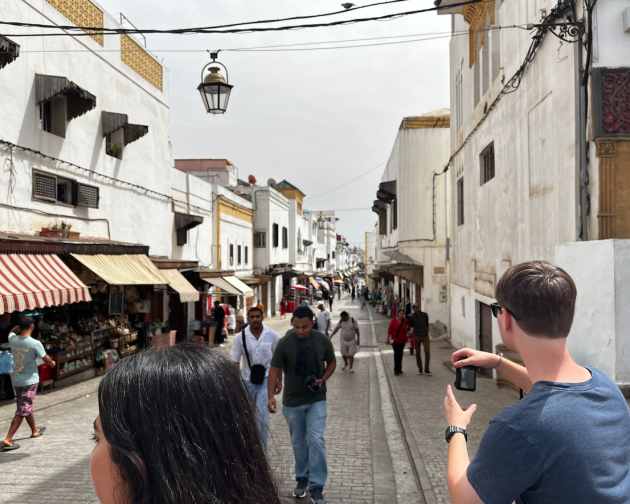
All IES Rabat students will be placed with a family that lives in the Old Medina, so students will be, at a maximum, a 5-minute walk away from their nearest peer. The Old Medina tends to get busy, loud, and crowded at around 5-6 P.M. but even then I find it to be manageable and enjoyable at times depending on my mood. In the morning when I leave for class (~8:15 A.M.), the medina is largely empty except for students going to school and some breakfast stalls open for business. That may be my favorite time of day in the medina also because at that time I feel more comfortable speaking with locals due to the relaxed atmosphere.
Returning to the topic of host families, I would say the most important practice to bring to your relationship with your host family is communication. Your host family will provide you with three meals per day so if you have plans to miss a meal do not hesitate to contact your host family. Food waste is a big “no-no” in most Moroccan households.
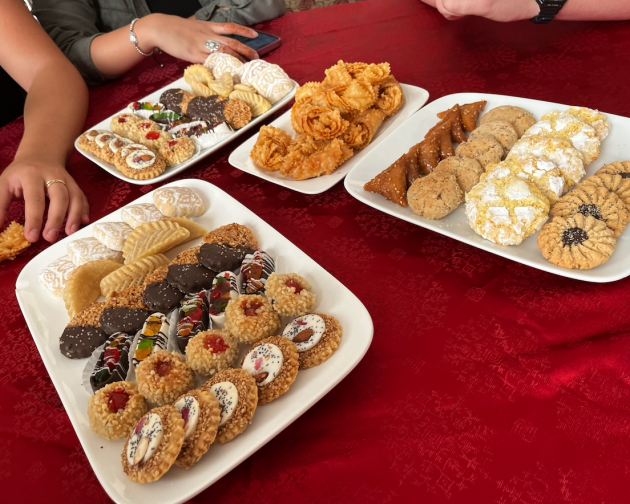
Breakfast in my family is usually tea, meloui, and harcha or beghrir with a selection of butter, white cheese, amalou, strawberry jam, apricot jam, and olive oil. Lunch is typically a packed lunch which can vary and couscous or other bigger dishes on the weekends. Dinner can be anything from pasta to tagine depending on what the “vibe” is. Lunch tends to be the biggest meal of the day and dinner is lighter. Also, dessert is rather common and it normally contains some kind of nut so beware my friends with nut allergies. Nuts are also used as garnish for several types of tagines so my advice would be to always ask whoever made the food to verify that there will be no nuts in your meal if you have an allergy. If you do not know french or arabic, keep a screenshot of a translation into arabic stating your allergy. Vegetarianism or veganism is also a very hard lifestyle to continue in Morocco as many of the most traditional dishes revolve around meat. I, personally, made the choice to pause my vegetarianism while in Morocco and I believe I made the best choice for me.
The biggest culture shock I experienced regarding food in Morocco is the lack of variance in cuisine at home. In America, my family regularly eats foods from many cuisines but Morocco does not import as many ingredients. This means that most all meals with host families are traditionally Moroccan foods - as a result I have found myself biblically missing chinese food despite the wonderful cooking skills of my host mom.

More Blogs From This Author


Returning Home
Blog Summary:
If you study abroad during the fall semester then you can wrap up the souvenirs for your family and friends and treat them as Holiday gifts
Some...



Zanna Anderson
Hi! My name is Zanna and I am a junior from The College of Wooster studying abroad in Rabat, Morocco for the Fall 2025 semester. My majors are Global Studies and Statistics and Data. I also speak English and French and I am excited to learn Arabic.

