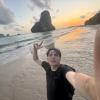
Hello! My name is Valery, and I am a rising senior in Boston studying International Finance. I will be studying abroad with IES Abroad at Korea University in the Fall of 2025.
However, I will say that this isn't my first time studying abroad in South Korea. I spent my freshman summer at Yonsei University taking a Korean language course for six weeks.
I can imagine you're thinking, "If she has already gone once, why is she going again?" Trust me– I've asked myself that question a couple of times too.
Studying abroad in Korea as a freshman was my first time being abroad– and being truly on my own. Beyond adjusting to a new culture, I had to navigate a new level of independence. I couldn't hop on a bus to see my mom or walk into CVS for medicine when I was sick. I had to let go of [almost] everything familiar to adapt to life in Seoul. And honestly, I can't think of a time in the U.S. when I received multiple emergency alerts in one day. (Oh, btw… those are ~usually~ not life-threatening alerts.)
Pushing myself outside of my comfort zone– sometimes just by stepping out of my dorm– was exhausting, but I didn't realize how much I was learning, adapting, and growing every day. Each challenge prepared me for the next. When I returned to the States, the reverse culture shock hit me hard! I didn't need to line up neatly to enter the subway, hand over money with two hands, or avoid small talk in elevators. That's when I realized: I had successfully assimilated into a new environment– using what I knew to figure out what I didn't.
With that, I have a goal of returning to continue pushing myself outside of my comfort zone and seeking experiences I didn't have the confidence to pursue before.
This is how I am planning:
1. Weekend Trip Planning
While I do intend to explore Seoul to its fullest extent throughout the semester, I hope to plan weekend trips to experience different cities. Using Naver Cafe, I searched "국내여행" (Domestic travel) to learn from the locals about where the best weekend spots/activities are around the country.
Using an Excel sheet, I have mapped out different weekend trip destinations to explore after I arrive in Korea. Each entry includes: the destination, best mode of transportation (Plane, Train, Bus), travel time, accommodation options, top things to do in the area, and the ideal season to visit.
If this is your first, second, third… or even tenth time visiting Korea– do not feel pressured to do a weekend trip. Weekend trips are easier said than done. You can make the most out of the large, bustling city of Seoul to fulfill your study abroad experience.
2. Financial Planning
This past semester, I started paying closer attention to my daily expenses. I generally try to spend modestly– with my largest expenditures on food, transportation, and toiletries. These are pretty small compared to bigger costs like tuition, housing, or my phone bill, which I thankfully don't have to worry about.
While I understand that not everyone's situation looks the same, it is safe to assume that there are a few new things that we will have to budget for: food (given that we have no meal plan), toiletries that couldn't fit in our luggage, daily transportation to and from school, a SIM card, textbooks, currency exchange fees, seasonal clothes that we may not have… and the list goes on. My wallet is already hurting just thinking about it. While we do not have to splurge on these items, it is a good idea to know how to mitigate some of these costs and track them.
- Track weekly spending
Take a photo of all receipts and organize them in apps like ReceiptJar and Spendee. Some debit/credit card apps offer similar purchase trackers. However, since navigating Korea requires cash at times, it is best to use a budgeting app that is flexible across currencies and payment methods. Tracking weekly spending can help you get a good idea of what you are spending the most on to inform future purchases.
- Find a debit/credit card with no foreign transaction fees or ATM fees
Tip: If you are traveling from the U.S., bring a lot of new $100 bills. When you find a currency exchange store in Myeongdong, you will be pulled in by the amazing exchange rate that is shown on their TV screen. However, you will be disappointed when you find out that the amazing rate is only for new $100 bills… Thank me later.
If you do not want to rely heavily on cash throughout the semester, it is important to have a debit/credit card that does not charge foreign transaction fees or ATM fees. The Charles Schwab debit card was a perfect and free option that allowed me to get a great currency exchange rate without any additional costs. Also, with this card, I did not have any issues paying in any of the stores I bought from. Additional card options include Capital One and the Wise card.
- Work as much as possible before the program
Unfortunately, with our student visa, we are not allowed to work while in Korea if we are staying only one semester. This includes finding a job in Seoul or even working remotely with a job from our home country. That being said, it's important to find some kind of job to make extra money for spending on the side. This might include dog walking, applying for work-study at your university during the summer, or even selling items on Depop!
3. Reaching Out to Others
As an INFJ, being the first to reach out can be quite difficult. However, it can be reassuring to enter your study abroad program with a few familiar faces. If others from your school are also studying in Korea, try to make time to connect with them. Learn about who they are, why they chose Korea, and what they are looking forward to accomplishing while there.
Everyone's study abroad journey will look different, but preparation doesn't have to be overwhelming. If there is one thing I've learned, it's that you really can't be too prepared– but you can feel more grounded by doing what you can ahead of time. As someone going abroad for the second time, I hope this post gives you a clearer picture of what to expect, how to plan, and what's worth thinking about before you go!
More Blogs From This Author

Seoul, My Soul
Counting down the days or watching them disappear?

Valery Crayton
Hi! I’m Valery, a rising senior at Boston University studying Finance and Global Business.
I drink boba tea at least once a week, love community service, and am an INFJ. I am a foodie at heart and will always make room for a sweet treat~