For eight weeks, excitement and anticipation for the IES Abroad trip to Morocco circulated throughout our program as everyone speculated about the impending journey. Nobody knew what to expect, despite receiving an orientation and our itinerary in advance. Bits and pieces of information from staff only piqued our interest.
Last Thursday, the big day finally arrived. As I write this on the bus ride back to Granada, I realize how severely I had underestimated how valuable this trip would be. We stayed in homestays in Rabat and met generous Moroccan families and students, who introduced us to delicious food, Moroccan hospitality, and Rabat’s strong community.
Over five days, we explored four cities. Here's our itinerary:
Day 1: Tangier
- Take the ferry across the Strait of Gibraltar
- Guided tour through the city
- Eat a traditional Moroccan dinner - we had chicken tagine!
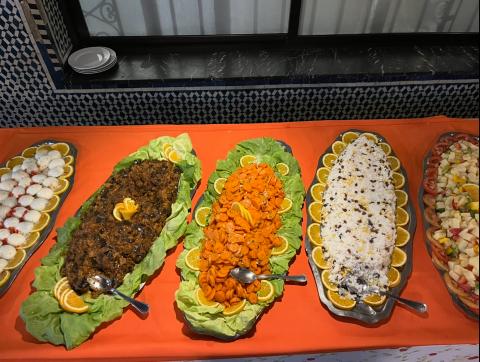
The ferry across the Strait of Gibraltar was fantastically beautiful, quite entertaining, and slightly frightening (the boat was pitching quite a bit; I felt like a lost sailor from the 1700s). Tangier was a bustling city with adorable cats roaming the streets and simple yet detailed architecture. Our dinner consisted of various Moroccan dishes, such as zaalouk, followed by chicken tagine. It was the best food I’d had all semester.
Day 2: Tangier, Asilah, and Rabat
- Visit DARNA, the local women’s center, and have conversations with Moroccan university students about current events, Moroccan culture, and women’s rights
- Delicious chicken and root vegetable couscous
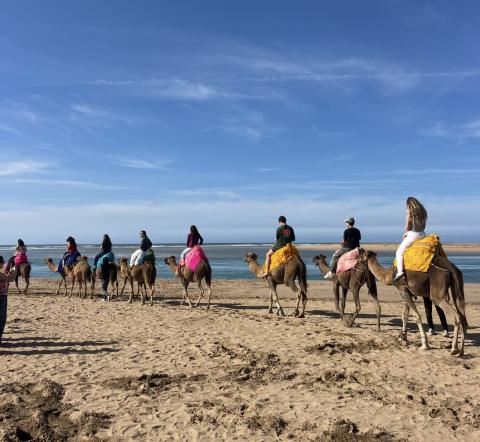
- Drive to Asilah, a beautiful coastal town, and stop to ride camels on the beach
- Tour a small, traditional bakery in Asilah and try their bread
- Head to Rabat and meet the homestay family
- Tour of the Rabat coast with host brother and dinner with the family
Our conversation with students at DARNA challenged some of the Western views I’d had about Morocco. While arranged marriages still happen and the parents’ blessing is important, many Moroccan women also marry men of their choice and date for several years. We discussed the importance of DARNA, which teaches women new, marketable skills, and the role of Moroccan women in society. Later, we got to meet our homestay family in Rabat, and found out that one of our classmates studied abroad there last semester and stayed with the same family!
Day 3: Rabat
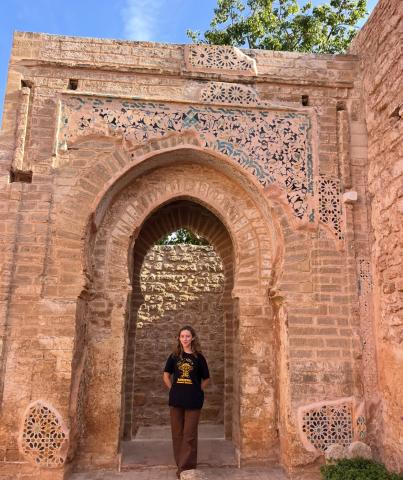
- Explore the Roman ruins of Chellah alongside Moroccan university students
- Visit the Mausoleum of Mohammed V and listen to the prayer over his tomb
- Eat another traditional lunch with the host family
- Tour the Kasbah with some university students, and regroup at a café to try Moroccan sodas and milkshakes
- Take baths at the local hammam (some of the guys paid for massages!)
- Attend the henna party hosted by my host mom, with clementines and dates as party snacks
- Dinner with the host family
We were allowed to walk inside the ruins of Chellah, which were incredible. The gardens created a sense of serenity and the ancient architecture was magnificent. We also explored alongside students from the University of Rabat, who were very friendly, and I learned that one of them dreams of visiting Sweden and is pursuing a master’s in computer science. It was a lot of fun, and we got Moroccan milkshakes later (made from milk, not ice cream) and then took baths at the local hammam, a public bath used in both Spain and Morocco for centuries. We all got henna after, hosted by my host mom, and had one final dinner together, followed by pomegranates.
Day 4: Rif & Chefchaouen
- Say goodbye and thank you to the host family, with one final, exquisite, traditional Moroccan breakfast
- Drive to the Rif mountains to have a conversation and lunch with a rural family living in the mountains
- Tour the family’s land and meet the patriarch, who also happened to be the Sharif (leader) of the village
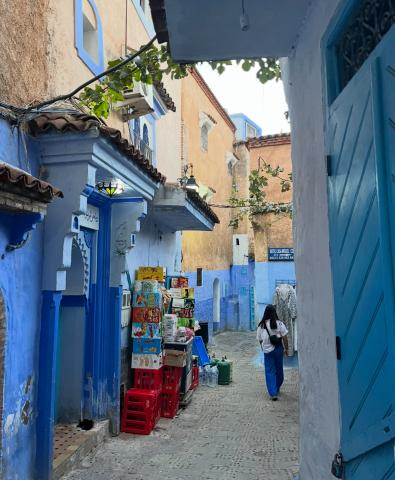
- Journey to Chefchaouen, the “Blue City” of Morocco, and explore the medina
- Buy goods in the market
- Dinner at a local restaurant
- Reflection in small groups and hang out on the rooftop
We met a family in the Rif mountains, and spoke to the mother and grandmother for an hour as we exchanged questions. Aysha, the grandmother, was incredibly beautiful and much preferred the countryside over the city because she had “all the fresh air she could ever need.” Her granddaughter speaks four languages and studies mathematics in the city, and Aysha was incredibly proud of her. We also met Aysha’s husband, the patriarch of the family and the village Sharif. As Sharif, he helps his neighbors get passports, sort out troubles, and acts as a kind community leader. Afterward, in Chefchaouen, I bought loose-leaf tea and a leather bag by haggling. I didn’t mean to, but I bought the bag for almost half the price it was marked at (I asked for a cheaper bag, and the shop owner insisted on just giving me a discount). Our guide for the weekend, Omar, was hilarious and knowledgeable. On our last day, he wore a baby pink Bass Pro Shops hat and a monochrome brown zebra-print backpack, and returned our passports to us by reading out our middle names.
Day 5: Depart
- Hike to a lookout in Chefchaouen to watch the sunrise
- Breakfast and head home by bus and ferry!
While we had a long travel day ahead, it provided ample time to reflect on the beautiful trip we’d had and look through our photos. I cannot recommend this trip enough!
More Blogs From This Author


Reflecting on Travel and My Homestay Post-Granada
I am deeply satisfied with my extraordinary semester. Let me break it down for you!


Alina Miranda
I am a junior at Colorado College on the varsity track and field team. My career passions lie in chemistry and renewable energy research, but I also love reading, oil and watercolor painting, drawing, hiking, and camping in my free time.