Alumnus Brendan Reilly (IES Abroad Vienna | Fall 1979), a sports agent for Olympic athletes, shares how studying abroad transformed his personal, athletic, and professional trajectory. Brendan also shares advice for college athletes interested in studying abroad.

IES Abroad: What first motivated you to study abroad, and why did you choose Vienna? Did your athletic background influence your decision or mindset in any way?
Brendan Reilly (BR): My first trips abroad were six weeks in Scandinavia and the Soviet Union when I was 15 years old, then a family trip to the Montreal Olympics the following year. That sort of planted the seed of interest in me to explore international life. When I began exploring study abroad opportunities in college, I still had only Russian as a foreign language; but the prospect of Moscow life in the Soviet Union era was not exactly a Siren’s call. Through my advisors at Boston College, I found the IES program in Vienna, with classes primarily in English and the opportunity to begin German language from scratch. Vienna also offered the opportunity to explore new subjects such as art history and international economics. My athletic background did not influence this decision at all.
IES Abroad: Were there any challenges, barriers, or hesitations you had before going abroad-especially as a college athlete? How did you overcome them once you were there?
BR: I did not have many hesitations as an athlete. I will say, though, that it was a bit rough the first few weeks. For training, I was basically running around the Prater or along the Danube Canal without any real focus. Then in mid-September I was out for a run near our second-district apartment and passed a small club called the Lauf und Conditions Club Wien, known even now as LCC-Wien. I went in and introduced myself and met the club president and coach, Adolf Gruber. Adolf was one of the legends of Austrian distance running, with numerous national records and three Olympic marathons to his credit. He began coaching me and having me train with the club, and from that the door opened to do some racing in Austria.
IES Abroad: As an athlete studying abroad, what did a typical day look like for you? How did you balance training, academics, and exploring Vienna?
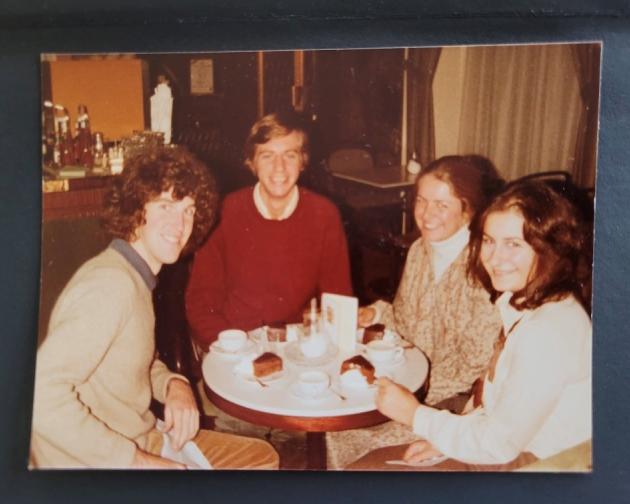
BR: As with any college athlete, I quickly settled into a Monday-Friday routine to efficiently use my time. Most mornings we’d have breakfast in our apartment in the 2nd District, then as often as not my flatmate Stu Tom and I would walk over the Palais Kinsky. There would be a full day of class and studies, then usually about 4:00 or 5:00 pm I’d head to the LCC Wien clubhouse and do an afternoon workout with the team. I’d usually be back to the apartment by 7:00 for dinner and homework. If there wasn’t a club practice, then I might run early so I’d have time after classes to hang out with classmates at the Café Hawelka or a Cafe Aida, or go explore Vienna.
IES Abroad: Many student-athletes worry they can't study abroad without falling behind in their sport or team life. What would you say to them?
BR: To start, if a student-athlete is a scholarship athlete, then there will be various obligations to his or her college program according to the terms of the scholarship and study abroad simply might not work.
For most student-athletes, there could be several ways to work around this. Students now have access to range of ways to explore how to pursue their sport even when away from home …. the worldwide web, social media, international sports federations, and I imagine even local IES staff. Almost none of these resources existed back in 1979. Student-athletes can work with these resources to set up training or competition even before landing in the country of their studies, rather than leave it to luck as I had done.
Another way to look at it is to consider doing just a semester or summer abroad instead of a full year. An autumn soccer player could look at Spring or Summer semesters abroad; a Spring lacrosse, baseball, or softball player might look Autumn semesters abroad; a year-round distance runner might consider skipping Autumn cross-country season to study abroad and return for the Spring outdoor track season.
IES Abroad: You're now a sports agent working with Olympic athletes. How did your time abroad- shape your approach to your career and to working in global sports?
BR: In terms of my career, my time in Vienna changed my career path. As a mathematics major, I had been leaning toward a career using those skills, possibly in an academic setting or a career such as an actuary. The year after Vienna, I began working for a company named Marathon Tours leading runners to marathon races around the world, and in turn that then led to applying for graduate school to study international affairs at the Fletcher School of Law and Diplomacy.
As for what became my 30+ year in international sports, my experiences both as an athlete and a Fletcher grad eventually to begin assisting elite athletes with their altitude training. As those athletes we helped train began winning medals and international events, the opportunity came to also represent them in their interactions with international events and sponsors.
For certain Vienna was the first step in making me more comfortable working in international environments. This includes flexibility of mindset and quick adaptation to various athletic and business settings and practices. And the natural curiosity we all have when studying abroad is the same curiosity I had throughout my career to learn more about my athletes’ home countries, or about the backgrounds behind competitions across the world.
IES Abroad: Looking back, what's one piece of advice you wish you'd been given before or during your study abroad experience?
BR: Stay longer! I only did a semester in Vienna, and in retrospect realize I should have stayed the full academic year. It is easy as 19 year-old student-athlete to think there are so many things that have to be down NOW and competitions that will never come again; but as somebody also brings the perspective of not only having worked with athletes who have competed in multiple Olympics or multiple world championships, but has also himself been running and racing for nearly 50 years, I can assure you that the enrichment of the four or eight months you use on a junior year abroad will far outweigh the “urgent” need to train and compete that one feels at age 19. Be confident that your athletic career will likely be longer than the four years of college - one of my athletes won an Olympic marathon gold medal at age 38; another won the Boston Marathon for her second time at age of 41.
IES Abroad: You recently returned to Vienna for the IES Abroad Alumni Weekend. What was it like reconnecting with that city and seeing how it's changed since your time as a student?
BR: It was a fantastic week! IES set up so many interesting programs catering to a range of interests that it made it difficult to choose events. And across the board the staff were wonderful hosts. I’d been fortunate to have returned to Vienna multiple times over the years, including a stretch when my athletes won the Vienna Marathon three years in a row, but at its heart the parts we love had not radically changed.
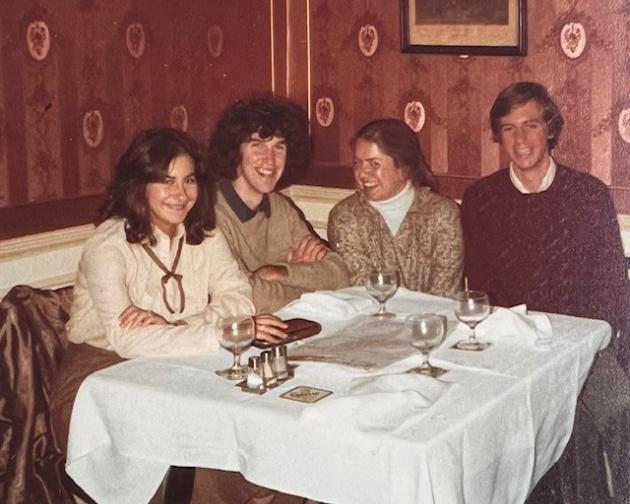
Also nice was reconnecting with the former students, including several classmates such as Stu Tom and Chris Temen. I particularly liked the opportunities IES provided to get together with everybody from 1950s alumni to current 2025-2026 students. The students today struck me as very bright and focused, such as the half-dozen with whom I shared a Stammtisch and another young woman with whom I had a two-hour conversation at the Café Museum. At the other end of the age spectrum, hearing the stories from older alumni of trans-Atlantic steamers and the early days of foreign study was a real treat.
At the final night’s dinner, my table talked how interesting the alumni seemed to be… interesting people, interesting lives, and interesting careers. It brought up a sort of chicken-and-egg question: was it their willingness as young students to explore life and studies abroad that set people off in the direction of such interesting lives, or is it that people who are destined to live interesting lives are the type of adventurous personalities who would decide at age 18 or 19 to go live and study abroad?
IES Abroad: How did being an athlete influence how you connected with people abroad—through teamwork, discipline, or competition?
BR: Certainly most athletes have the confidence to dive into new situations and face new challenges. In fact, many even embrace those opportunities. As I mentioned earlier, the discipline it takes to plan out one’s days and weeks to fit in training, classes, studies and homework seems to come somewhat naturally to most student-athletes.
My own experiences competing as well as my experiences at hundreds of events to which I brought elite athletes has let me connect with people round the world at a very tight and welcoming manner. There is a bonding experience when athletes from around the world compete together in international events, whether at the Olympic level or a 20,000-person mass marathon or cross-country ski event.
IES Abroad: In your opinion, why should college athletes consider studying abroad today?
BR: It will expand your horizons and make you a better athlete and better member of the world. If you find ways to participate in your sport while abroad, you will definitely learn new training practices. You will become mentally tougher by training in new environments and competing in a variety of circumstances and settings that likely will contrast with the very tightly controlled competition settings at home. And extra language skills never hurt anybody!
| 
| 
|
|---|
Check out all of our Alumni Spotlights to see real examples of how study abroad changed the lives and careers of our past students.
Are you an IES Abroad alum? Make sure to join our Facebook or LinkedIn groups so you can (re)connect with others.