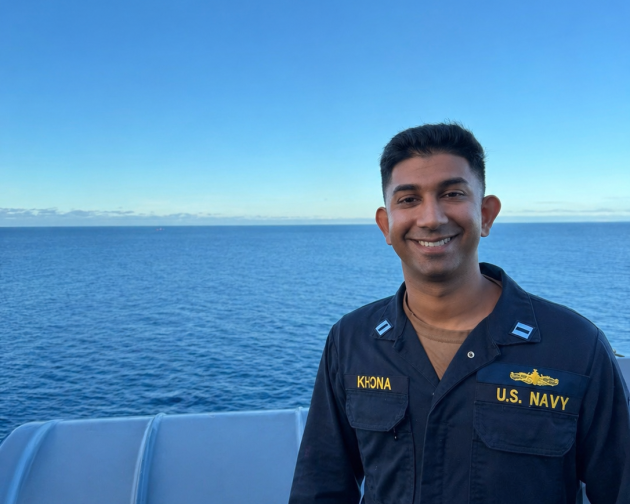
What can a semester in Buenos Aires teach you years later in the U.S. Navy and during a space shuttle recovery mission? For Jatin Khona, studying abroad built the curiosity and adaptability that continue to shape how he leads today. Read on to learn how his time in Argentina expanded his global perspective and prepared him for this historic event.

IES Abroad: What inspired you to study abroad in Buenos Aires?
Jatin Khona (JK): I wanted to spend time in a region of the world that doesn't get nearly enough attention. So much of international affairs curriculum and frankly so much of American foreign policy thinking centers on Europe, the Middle East, and East Asia. Latin America often does not get the appreciation it deserves, despite being a region of enormous complexity, history, and strategic importance. I was curious about that gap. I wanted to understand how economies like Argentina's actually functioned, how China's growing influence in the region was reshaping trade and politics, and what life looked like for people navigating those forces day to day.
IES Abroad: Looking back, how did your time abroad shape who you are today personally or professionally?
JK: It taught me that the most important things rarely show up in a syllabus. Being immersed in a different country, culture, and language forces you to develop patience, adaptability, and genuine curiosity about how other people see the world. I came back with a much stronger sense of how to operate in unfamiliar environments without defaulting to my own assumptions, how to read a room, build trust across differences, and find common ground with people whose starting points are very different from mine. Those lessons have been foundational in the Navy, where I've led diverse teams, worked alongside allied forces from multiple nations, and had to earn credibility quickly in high-stakes situations with no margin for error.
IES Abroad: Were there any moments during your study abroad experience that pushed you outside your comfort zone or changed your perspective?
JK: Every day pushed me outside my comfort zone in some way. I was navigating a new language, a new academic environment, and a new culture all at once. What surprised me most was how much I learned simply by paying attention to how people around me operated, how they approached problems, what they valued, how they communicated disagreement or built trust. People from different backgrounds have fundamentally different instincts about leadership, collaboration, and community, and none of those instincts are wrong, they're just different. Learning to recognize and respect that, rather than defaulting to what felt familiar to me, was probably the most important adjustment I made. It's a skill I've had to use constantly ever since.
"Buenos Aires is a city that rewards curiosity, and spending time in those neighborhoods with people from different countries and backgrounds, trading perspectives over dinner or coffee, gave me a much richer picture of how the rest of the world thinks about itself. Those conversations shaped me as much as any classroom experience."
IES Abroad: How did studying abroad help you develop skills that you now use in the United States Navy?
JK: More than anything, it taught me how to learn from people whose backgrounds and experiences looked nothing like mine. In Argentina, I was surrounded by students and community members who had completely different frameworks for understanding the world, different economic realities, different political histories, different ways of building trust and getting things done. I had to set aside my assumptions and actually listen in order to understand what was happening around me. That capacity, to genuinely take in how someone else sees a situation rather than filtering it through your own lens, turns out to be one of the most valuable things you can have as a naval officer. Whether I'm leading sailors from different backgrounds, integrating allied crews into joint operations, or coordinating with organizations like NASA, the ability to learn from people who don't think like me has been indispensable.
IES Abroad: You recently participated in the Artemis II recovery mission. Did your international experience help prepare you for working in high-pressure, team-oriented environments?
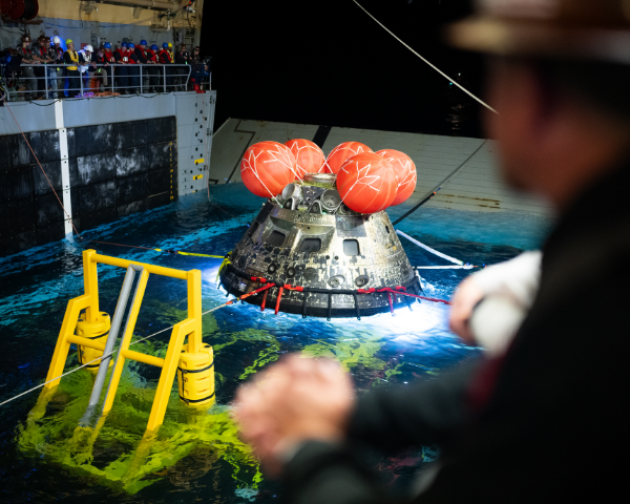
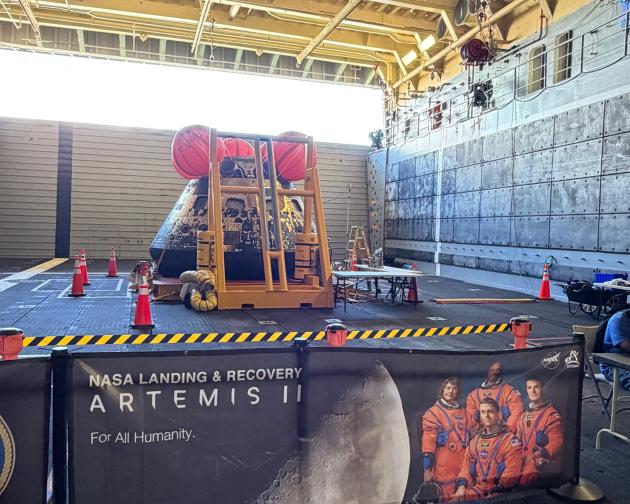
JK: Directly, yes. The Artemis II recovery involved aligning people from completely different professional cultures who each had their own priorities, language, and way of operating. NASA mission controllers, astronaut crews, helicopter pilots, Navy divers, and the ship's navigation team all had to function as one integrated unit under enormous pressure. What Argentina taught me is that you can't just hand people a plan and expect alignment. You have to understand how each group thinks, what they care about, and what they need to feel confident in the mission. In Buenos Aires I learned that by being surrounded by people whose frameworks were different from mine and having to build understanding from scratch. That same instinct, to meet people where they are and earn trust before you ask for execution, is exactly what allowed me to help bring those different Artemis stakeholders together effectively. The stakes were different, but the human dynamics were surprisingly similar.
IES Abroad: Can you walk us through your role in the Artemis II recovery mission and what a typical day looked like during that experience?
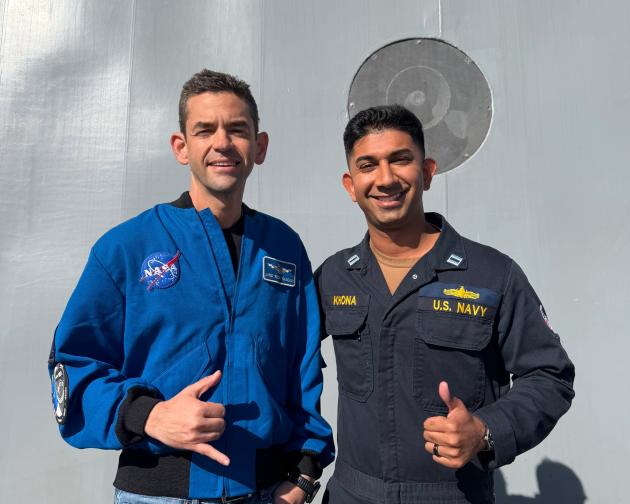
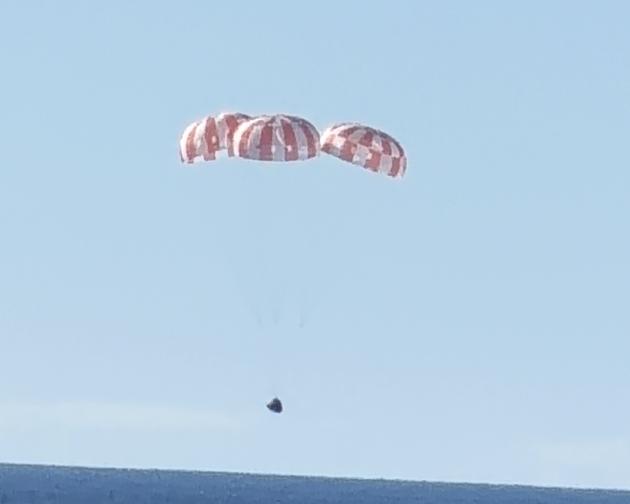
JK: As the Navigator of USS John P. Murtha, my core responsibility was precision navigation, ensuring the ship was exactly positioned to recover the Orion spacecraft and the four astronauts after their return from the moon. A typical day involved early briefings to review positioning plans and weather windows, close coordination with NASA on timing and contingencies, rehearsals with the navigation team, and continuous communication with the Captain on our operational posture. This was the first crewed lunar mission in over half a century, so the pressure was constant and the margin for error was essentially zero. What made it work was the months of preparation we had put in, making sure every person involved, from the divers to the pilots to the ship drivers, knew their role and trusted the people around them.
"The discomfort of being somewhere unfamiliar is the whole point, it's what forces you to grow. The students who get the most out of studying abroad are the ones who lean into that discomfort rather than waiting for it to pass."
IES Abroad: Did your experience abroad influence the way you approach service, teamwork, or global collaboration today?
JK: Profoundly. Argentina was the first time I had been truly immersed in a world that wasn't built around my own cultural reference points, and it changed how I engage with people across the board. I spent time with students, locals, and community members from all over Latin America and beyond, each of whom had different assumptions about how leadership works, how decisions get made, and what it means to show up for your community. I realized early on that the most interesting and useful thing I could do was stop trying to map everything onto what I already knew and instead just pay attention to how different people operated. That curiosity about other cultures and perspectives became a defining part of how I lead. In the Navy, it shaped everything from how I integrated foreign exchange officers into my crew, to how I approached joint exercises with foreign naval forces, to how I built alignment across stakeholder groups during the Artemis mission.
IES Abroad: What memories or experiences from Buenos Aires still stand out to you years later?
JK: Traveling to Iguazú Falls with my study abroad group is something I'll never forget. Nothing quite prepares you for the scale of it, standing at the edge of one of the most powerful natural spectacles on earth with a group of people you've spent months getting to know in a foreign country has a way of cementing friendships and memories in a way that's hard to replicate. Back in the city, the time I spent wandering through Palermo and Recoleta stays with me too: the bookstores, the cafés, the cemeteries that double as cultural landmarks, the neighborhoods that felt like they each had their own distinct personality. Buenos Aires is a city that rewards curiosity, and spending time in those neighborhoods with people from different countries and backgrounds, trading perspectives over dinner or coffee, gave me a much richer picture of how the rest of the world thinks about itself. Those conversations shaped me as much as any classroom experience.
IES Abroad: What advice would you give to current students who are considering studying abroad but are unsure if it is the right fit for them?
JK: Go and go somewhere that genuinely challenges your assumptions about the world. Choose a place that isn't already at the center of every conversation you've heard. Latin America, Southeast Asia, West Africa, regions that get overlooked in mainstream discourse are often the ones that teach you the most, precisely because you can't rely on existing narratives to make sense of what you're seeing. And once you're there, don't spend the experience in a bubble. Get out of the student housing and the tourist circuits. Go to Iguazú. Walk through Palermo on a Sunday. Sit in Recoleta and watch how people live. The discomfort of being somewhere unfamiliar is the whole point, it's what forces you to grow. The students who get the most out of studying abroad are the ones who lean into that discomfort rather than waiting for it to pass.
IES Abroad: If you could go back and tell yourself one thing before departing for your study abroad experience, what would it be?
JK: Don't just observe, participate. It's tempting to move through a semester abroad as a spectator, watching a culture from a comfortable distance. But the moments that actually changed me were the ones where I got fully involved, in the work, in the community, in the conversations that happened late at night with people from completely different walks of life. The more you put yourself into the experience rather than just passing through it, the more it becomes genuinely yours. I came back from Buenos Aires with something real because I gave something real while I was there.
| 
|
|---|
| 
| 
|
Check out all of our Alumni Spotlights to see real examples of how study abroad changed the lives and careers of our past students.
Are you an IES Abroad alum? Make sure to join our Facebook or LinkedIn groups so you can (re)connect with others. Check out our Social Media Directory for more ways to stay connected with your IES Abroad Center.
Help make study abroad a reality for students
Behind every study abroad journey is someone like you who believed it was possible. Your gift can be the reason a student’s passport is stamped for the very first time.