Welcome to the Frugal Student’s Guide to Surviving Modern Madrid! As a student who is paying my own way through college, I have to be conscientious about how I spend, make, and save money. So that will be what this post is all about: the Nickels Nickels Nickels of it all.
Let’s start with scholarships. I am already very fortunate to only pay about $3,000 per semester at my home college, and the tuition from my home college transfers to IES Abroad to make things simpler. This means that my tuition stays the same when I go abroad. IES Abroad offers scholarships based on your SAI (Student Aid Index) from the FAFSA Form. I have an SAI of -1500, the lowest possible (which makes our family sound poor, but we are quite well-off, I assure you). This gives me a sizeable Pell Grant towards my home university tuition, and IES sort of matched that with a scholarship of $7,000 (your mileage may vary). Hope College, my home university, even supplied another $2,000 for studying abroad! Things are looking pretty good right now! I might even get paid for going abroad!
However, housing is a different story. At least here in Madrid, IES housing costs a minimum of $5,600, with many options that cost more. Fortunately, I was already eyeing a Homestay, which is one of the minimum-cost options. Doing the napkin math, that leaves us with -$400 of cost, which you can get deposited straight into your bank account.
You cannot forget that your flight to and from your location will probably cost upwards of a thousand dollars (of course depending on location), which is what I spent those $400 on. So all the big things are out of the way; the rest of the trip should be pretty cheap, right? Well, for the most part, yes. But all the smaller things really add up more than you might think. Let’s get to food.
Hands down, the best thing you can do to curb food costs is to live in a Homestay. Not only is it the minimum cost for housing, but you also get breakfast and dinner 7 days a week! This leaves the cost centered around the midday meal. Without a homestay, meals are up to you, but the program often has other options. Some housing supplies breakfast and dinner for a price, and the university you go to will have a cafeteria. However, I have to suggest that you also try plenty of local food! But make sure you walk around and look at prices to find the best ones, because plenty of places are overpriced for tourists. You will accidentally pay extra for food or souvenirs. It is frustrating to see a lower price a block away for something you just bought, but it is inevitable.

In Spain, it is common to buy a “Ración” to share with friends. This is a larger meal that will feed everyone. There is a culture of sharing food here, so Spaniards will take turns paying for raciónes and other meals. This is very strange to someone like me, who will often buy items on the menu based on price. It seems like in the long run, I’ll be paying more. And I might, but it is more important to get cultural experiences. Chances are that raciónes are cheaper than a meal for everyone, and I have to hope that they are in the long run.
You can’t rely on cultural experiences for every lunch, so I recommend shopping at a supermarket for some pan de moldo (pre-sliced loaf of bread), cheese, lunch meat, tuna, jam, etc., and Tupperware to make sandwiches for the busier days. Cheese especially is really good and quite cheap if you know where to look.
After food, your majority expenses will be travelling and commuting. If you are planning on Madrid, read this part carefully! There are four main types of transportation in Spain: Bus, Metro, Train, and Uber/Car. For driving and/or Ubering, it’s only useful when you are going to be late or exiting the airport. From El Centro (where the IES Abroad center is), it only takes about 2 hours to get anywhere in Madrid with a combination of the three and walking. The Train (AKA Renfe and Cercanias) is what is used to get far, fast. Metro’s work narrow the location down more, and buses are cheaper, cleaner, and more abundant, though slower, than metros. They each have their niche to fill.
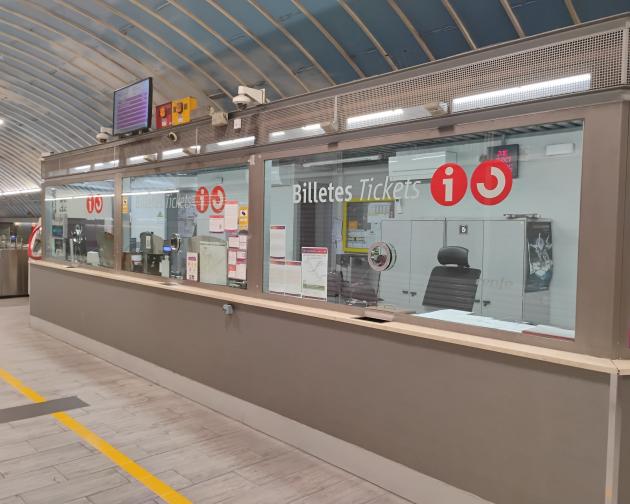
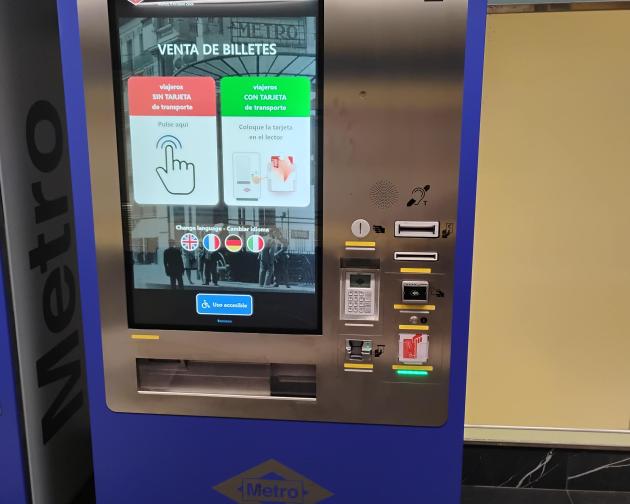
Now that you have a basic understanding of the transportation needed to get around in Madrid, it is time to explain the most cost-effective solution for each of these. A couple of months ago, this would be a simple “Buy the student Abono pass for 20 EUR and get all three for the entire duration of your stay.” But it isn’t a couple of months ago; laws changed, and it is now only available for those with proof of residence for the next 6 months. So, my friends and I have invested quite a bit of time to hack these prices down. Especially if you have more than one campus to attend, you need transportation to be cheap. Here is what we found.
Metro and bus prices can be combined into one card, available from kiosks in Metro stations. You can fill up the card every 20 trips for about 14 EUR. In my experience, you will use the buses more, but it is wonderful to be able to combine them into one card that saves you money on both (Each bus trip is 1.5 EUR). As for the train network, you can get an Abono Mensual Card for 20 EUR (+1 EUR for the card itself) for unlimited rides for a month. After the month, you can refill it. To get this and to refill it, you must ask a Renfe employee. You can tell which ones to ask, because they will have information regarding the pass on paper stuck to the glass they sit behind (Pro Tip: show them your ID when they ask for your name; cross-lingual spelling is tricky business).
Assuming that you ride the bus twice a day for three days a week (to and from IES), ride the train twice a day for two days a week, and ride the metro twice a week (This is about what I do as I go to IES, UC3M Leganés, and my Homestay without other plans), that adds up to a monthly spending of about 41 EUR on transportation, or about 46 USD per month. If you are here for roughly 4 months, you are spending about 184 USD on only the strictest transportation budget, so expect higher. Considering you probably won’t have everything together when you first get to Madrid, will probably take a wrong trip once or twice, and will have plenty of trips of your own and with friends, your transportation budget really could be anything.
While this is not a requirement, I recommend purchasing a Spanish SIM card. It's really not too technical; you can keep your existing SIM card, and you will have a Spanish number to use. All WhatsApp conversations are also easily transferable. Some places and things only use Spanish numbers, so having one may very well come in handy. The one I have gives a month of service, 90 GB of data, and some minutes (though they are only able to call within Spain) for 10 EUR. There is no Messages app here; everyone uses WhatsApp and Data.
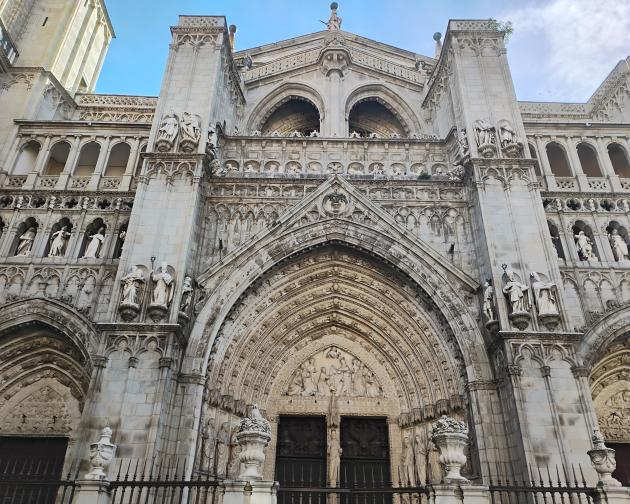
There are some free ways I recommend to spend time and have those cultural experiences: your program (mine: IES) will set up events and trips that are free to attend. Through these, I have cooked paella, watched Flamenco, explored Avilá, and talked with Spanish students! Museums are also a great way to spend your free time, and Madrid usually has ways to access them for free, whether that is a student ID or going on a Sunday.
Madrid is a really fun place to explore and spend time and money in. It has tourist traps, but it also doesn’t have sales tax. What you see on price tags is what you’ll pay. Some places have really great coffee and pastries for a great price. Some places overcharge for pre-packaged products. Learning to navigate spending money is something that does not come as easily as I would have liked it to, but it is certainly a necessity.
“I don’t need luck, I have a plan!” -Dipper Pines
More Blogs From This Author


Strange Sights in Madrid
Nathan ranks strange places he has encountered in Madrid by their off-putting vibes and connects with them in a way unique to humans.


Nathan Koedyker
Nathan Koedyker, here! I am a parts-times poet, gamer, website developer, author, and electrical engineer. I am a dual-major on a mission to Madrid, Spain to broaden my horizons to learn Spanish and their culture!