Possibly one of the best things about studying at the University of Auckland is the two week long mid-semester break! Being so used to a fall break of only a few days, two weeks is practically a full-on vacation.
This year, the IES Abroad mid-semester trip was to Te Tai o Poutini, the West Coast of the South Island, with our Christchurch whānau (see more in my blog post “Hikoi Poutini 2026”). After Te Tai o Poutini, we still had an entire week left of mid-sem break, meaning a whole week to spend in Rarotonga! Splitting mid-sem break between Te Waipounamu and Rarotonga was the perfect choice and a must for anyone studying with IES Abroad New Zealand.
Rarotonga Experience as a Hawaiian
As a Native Hawaiian born and raised in Hawaiʻi, it was surreal to be a tourist in a “tropical paradise”. While I love and appreciate my home, I never understood why people were so obsessed with going on vacation in the tropics. At home, I have a slew of responsibilities in the back of my mind that affect my experiences of hanging out at the beach or hiking to a waterfall. However, experiencing what it is like to have no responsibilities where your only job is to relax at the beach, it gave me a new perspective as to how so many people view my home.
My experience as a Native Hawaiian also makes me critically aware of the exploitation of local communities through the tourism industry. While travelling I always make an effort to learn the history and culture of a place, and become familiar with the unique flora and fauna. I aim to treat the place I am visiting as not only the home but the life itself of all those living there.
Visiting Rarotonga is special no matter who you are, but having a connection as both a tropical islander and Polynesian made it feel like I was partly just going to visit extended family rather than a vacation.
With my perspective in mind, letʻs get into the nitty gritty of planning your trip!
Planning for Rarotonga
Allot time for several planning sessions to get everything done before mid-terms make it impossible. And beware: there are only flights in and out of Rarotonga every few days so plan accordingly.
Where to stay (budget and luxury)
We stayed with Rarotonga Backpackers who have several locations across the island in a variety of price ranges. The owner, Paul, is very friendly and available for any questions or help you may need while in Rarotonga. However, if you are on a budget and want to make sure you get the cheapest rooms, make sure to book in advance as possible.
Transportation
Rarotonga has many transportation options both budget friendly and higher cost. Looking to spend the least amount possible, we travelled exclusively using either our own two legs or the public bus.
Rarotonga has one main road that circles the entire island and takes the bus about 50 minutes to drive the entire loop. During running hours, there is both a clockwise and anti-clockwise bus circling the island. All you need to do to get on is wave at the driver in a spot where they are able to pull over and pick you up. To get off the bus, just shout out to the driver “Stop please!”
Donʻt forget to bring cash with you because the bus is cash only. It costs $5 NZD per person for one ride. Or you can purchase a 10-ride pass for $35 NZD. During our stay we used two 10-ride passes total for the both of us.
Activities
BEACHES
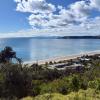
Of course, the number one must do activity is go to the beach! All of the beaches are accessible from the bus and very friendly for all swimming strengths. Some of the top spots are:
- Aroa Beach
- Black Rock Beach
- Muri Lagoon
Make sure to pack reef safe sunscreen and respectfully observe the coral and marine life while having fun.
HIKING
We hiked two of the most popular tracks in Rarotonga, each with their own challenges and unique experiences:
Raemaru Track
- ~ Two-to-three hours long (to the summit and back)
- Steep with a narrow path
- Has phone service the entire track
- Must rock climb vertically with ropes near the end to reach the summit
- Several natural look-out spots along the track
The Cross Island Track
- ~Four-to-six hours long (one way across the island)
- EXTRA steep with a very narrow path
- Must follow the track markers, hard to see the path at some points
- Insane views all along the track
- Lookout and path to Te Rua Manga (the Needle) with optional rope rock climb to a higher look out
- If you start at Avarua the track ends at Papua Waterfall where you can swim and cool off
Both challenging but worth it!
Make sure to take lots of water and protection against the sun. DON’T hike if it has been raining. And make sure someone knows your hiking plans just in case. Do a bit of extra research beforehand on the native plants and animals because you will be spending a lot of time with them.
CULTURE: Fire show & Museum
As it is wherever you travel, learning about the culture and history of Rarotonga and the Cook Islands is essential.
A popular way of participating in the culture is through fire shows. While there are many shows offered around the island (both paid and free) we went to the Te Vara Nui Village Fire Show. Included was a buffet dinner composed entirely of Cook Islands foods. It was clear the Te Vara Nui cast loved their jobs and were extremely engaging and informative.
For a more historical background, Te Ara Cook Islands Museum of Cultural Enterprise is a small but packed museum that illustrates pre and post colonial history of Rarotonga and the Cook Islands.
Enjoy your trip and safe travels!


More Blogs From This Author


Hikoi Poutini Fall 2026: South Island with IES Abroad
This year, during mid-semester break, IES Abroad New Zealand hosted a joint Auckland and Christchurch trip to Te Tai o Poutini (the West Coast of the South...


Pono Merryman
I study Studio Art and Child Studies and Human Development at Tufts! I am Native Hawaiian born and raised on Big Island, Hawaii who is interested in indigenous knowledge, education, and fiber arts. In my free time I film k-pop dance covers and knit.