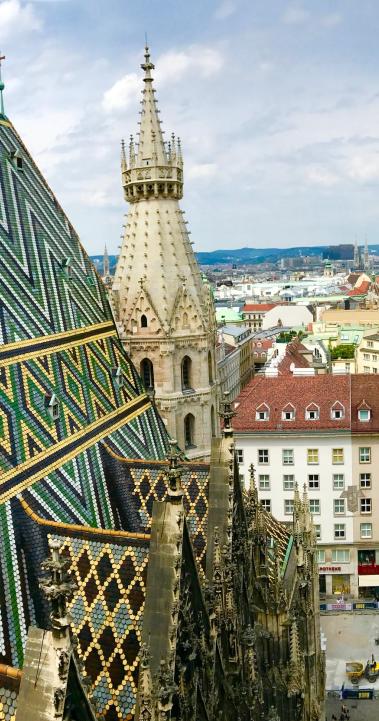
We’d like to let you in on a little secret: Vienna is extraordinary. Quickly—gather your things and study there before more students realize what a hidden gem it is. Consistently rated one of the top cities in the world to live in, come see for yourself why the music, culture, and history of this world-class city elicit nothing but adoration from those who go there.
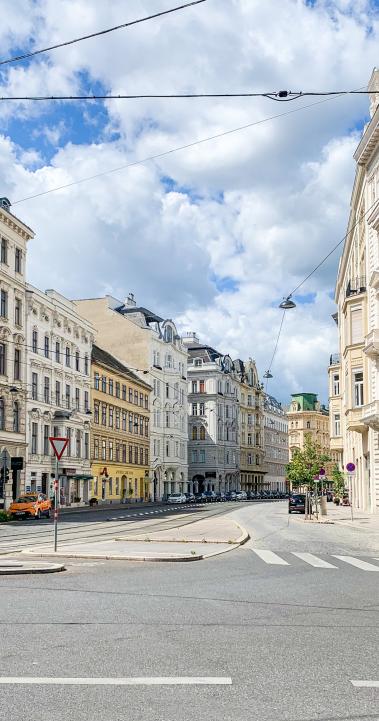
Vienna, a fascinating city of 1.7 million people, lies in the heart of Europe. Some would even say it is the cultural heart of Europe, preserving the best of its rich history and culture while opening itself to challenges both as the capital of a European Union member state and an important gateway to Central & Eastern Europe.
Traditionally considered to be reserved and conservative in nature, the reality of modern Viennese culture reflects an openness and appreciation of the multi-cultural makeup of modern Vienna.
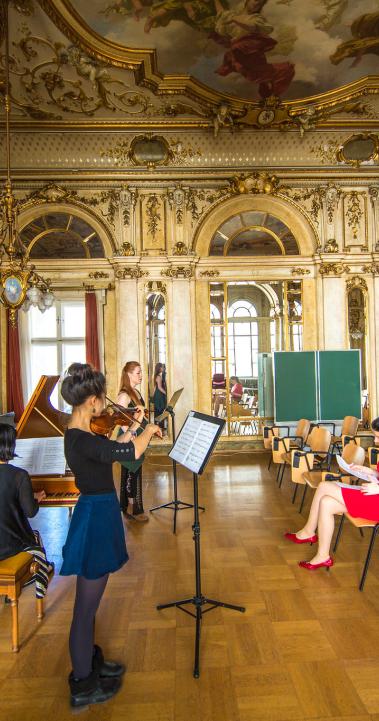
The opportunity to hear great music, including classical, modern, pop, and jazz, is so considerable that you could be busy every night. The season for the performing arts in Vienna lasts from September through June; the Wiener Festwochen is a month of special concerts, theater, and opera productions from the end of May to the end of June.
Vienna also offers wonderful theater and opera. Even beginning students of German find that they can follow the excellent productions of the world-renowned national Burgtheater and many other groups.
Great Viennese traditions are the wine cellars and coffee houses, where friends can meet over good food and drink and spend a relaxing evening. This tradition is called Wiener Gemütlichkeit.
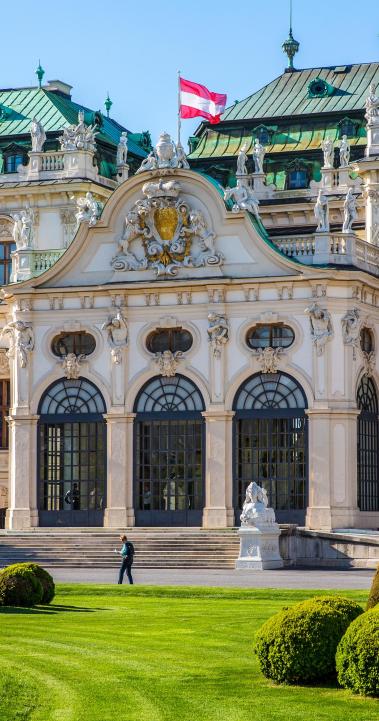
An entire day can be devoted to exploring the Schönbrunn Palace, the summer residence for the imperial family. The Palace is popular among tourists due to its lush gardens, impressive zoo, and 1,441 beautiful palace rooms. The Palace has an interesting history as well: this is where Marie Antoinette grew up, Mozart performed, Napolean lived, and Kennedy and Khrushchev signed a treaty!
The magnificent Hofburg Palace was home to some of the most powerful Austrian rulers, including Marie Antoinette. Hofburg is truly spectacular with its national library, treasury, theater, museums, chapels, horse stables, and more. On Sundays, the 500 year-old Vienna Boy's Choir performs the most beautiful music. Mozart worked with the Choir centuries ago.
More composers have studied in Vienna than any other city in the world; for that, Vienna truly deserves the title as the "music capital of the world." The State Opera House is among one of the most beautiful and ornate opera houses. More than 60 operas and ballets perform there.
The Rathaus, or City Hall, was designed by Friedrich von Schmidt in the Gothic style and built between 1872 and 1883. It serves as the seat of both the mayor and city council of the city of Vienna. On top of the tower is the Rathausmann, one of the symbols of Vienna, and facing the Rathaus is a beautiful park called Rathauspark. In German, "rat" means "advice," "counsel" or "council".
"I loved the Rathaus in February when it is lit up. We would go ice skating from 10-11 for only four euros; it was so pretty, but also kitschy and fun." -Barbara G., Penn State University
Vertical Tabs