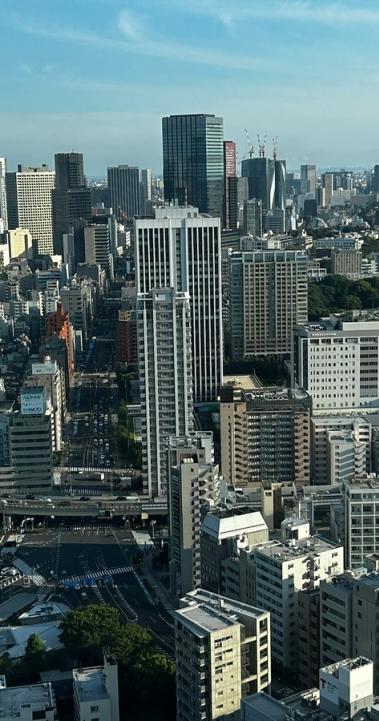
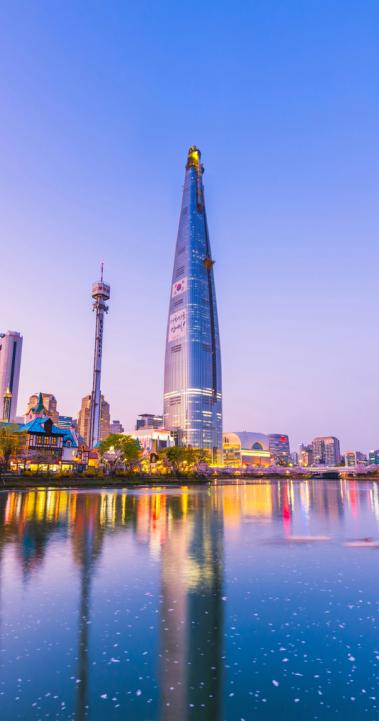
Situated on the tip of the Tokyo Bay, just forty-five minutes by train or subway from the heart of the city, the suburban town of Makuhari is your gateway to the best of Japan's past, present and future. Explore centuries-old temples, gardens and castles minutes' walk from ultra-modern skyscrapers, electronics stores and haute couture fashion centers. Dine on sushi, tempura, hamburgers, curry, pad thai, or Sauerbraten. Attend a sumo match or a baseball game. Learn tea ceremony, karate, or breakdancing. It's all waiting for you in Tokyo!
In 1853, when Commodore Perry and his “Black Ships” steamed into what is known today as Tokyo Bay, Japan was a closed society little known to the West. The mere sight of Perry’s Western technology sent shockwaves through the Japanese empire and led to a national effort to match European and American technical and social achievements. Today, Japanese technological innovation, industrial strength, work ethic, and social institutions have made the country a leader in the industrialized world.
The Japan visited by Commodore Perry is still very much alive in the form of thousand-year-old temples, intricate traditional art, and the formal tea ceremony. Although many temples were destroyed during World War II, faithful reproductions stand in large cities next to earthquake-resistant skyscrapers; smaller villages retain a distinctly traditional appearance.
Tokyo is the political and financial capital of today’s Japan. Before, it was the capital of the shogunate during the Tokugawa Era (1603-1868), before becoming the imperial capital at the start of the Meiji Era (1868-1912). Tokyo has been at the forefront of the modernization of Japan in the 19th and 20th centuries, overcoming devastation by earthquake in 1923 and aerial bombing in 1945 to stand as the largest, richest, and most important city in Japan. Nearly one quarter of the country’s population lives in the broad Tokyo metropolitan area.
From the heart of the financial district to the bright lights of Shinjuku and the boutiques of Harajuku, Tokyo’s modernity and fast pace are exciting, yet there is still beauty in its parks and the courtesy of its people. As the hub of the rail network linking all of Japan, Tokyo is an adventure in itself, and a gateway to scenic and historic attractions in other parts of the country.
Like most Tokyo residents, you will soon learn to navigate the metropolis by subway, train, and by bus. Commuting will become routine, as you join the millions who travel from home to work and back again daily. Entertainment opportunities abound, from the traditional art forms of noh and kabuki to contemporary entertainment like baseball. The Imperial Palace, the grand kabuki theater, the sumo museum, the Ginza shopping area, the Meiji shrine—all of these attractions and many more are available to you.
The Imperial Palace is the home of the Japanese Emperor. A massive wall encompasses the Palace and acts as a defense for the Emperor. Although the palace is closed to the public all but two days a year, visitors can experience the East Garden and Sannomaru Sozokan Museum year-round.
Shinjuku is perhaps the most impressive of the 23 wards in Tokyo. The Metropolitan Government Building, the Shinjuku Station, and many restaurants, stores, hotels, and international businesses are located in Shinjuku. Be sure to visit Nishi-shinjuku, the "skyscraper district" of Tokyo.
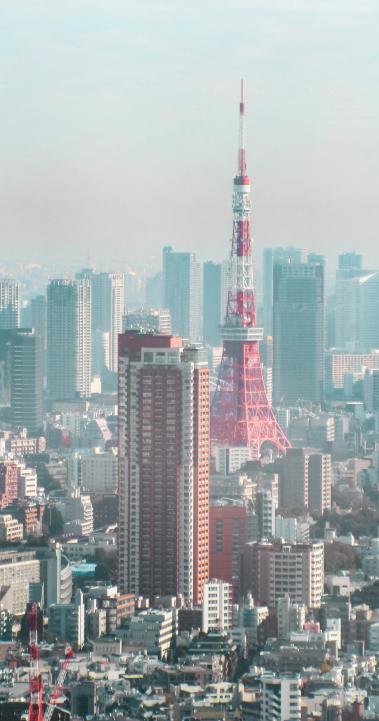
The Tokyo Tower is modeled after Paris's Eiffel Tower. Underneath the tower is FootTown, a four-story building that offers visitors many stores, restaurants, and museums. The Tokyo Tower Wax Museum is a favorite attraction, with wax models of famous people.
Vertical Tabs