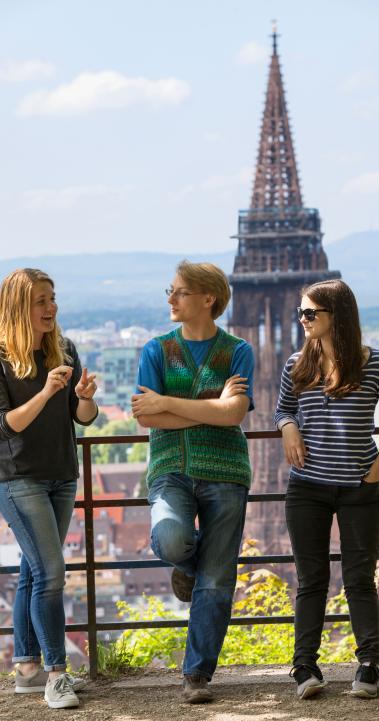
Known for taking the lead in the development of eco-friendly technologies and architecture, Freiburg attracts top researchers and environmental organizations from around the world. This English-taught program allows you to explore topics in disciplines like Environmental Studies, Forest Ecology, and Sustainability while living in Freiburg, located near the beautiful Black Forest and Rhine River Valley.
Freiburg, Germany
Environmental Studies & Sustainability


At a Glance
Program Dates:
- Fall 2026: August 25 - December 12
- Academic Year 2026-2027: August 25 - July 03
- Spring 2027: February 22 - July 03
Credits:
15 to 19 per Semester
Estimated Cost:
$25,495
Visa Required:
Yes
Housing:
Residential Community
Language of Instruction:
English
Language Prerequisites:
None
About the Program
Program Advisor

Rachael Grochowski
Once you’ve applied for a program, I’ll be your direct point of contact. From housing to course registration and everything in between, I’m here to help you prepare to study abroad. Once you’re accepted to your program, you’ll find even more detailed information about what you need to know before you depart in your Predeparture Guide. Let’s get started!
About the Destination

Why Freiburg?
The environmental movement took root in Freiburg long ago—and now it’s a way of life. Known for taking the lead in the development of eco-friendly technologies and architecture, Freiburg also attracts researchers and environmental organizations from around the world. Come study Freiburg’s many unique contributions to this important movement.
The Student Experience


Lessons from a Month Abroad
After a month abroad, the lessons learned abroad become apparent as we push into our programs with new family and friends abroad.


Program Dates
Fall 2026
Program Dates:
August 25 - December 12
Application Deadline:
Academic Year 2026-2027
Program Dates:
August 25 - July 03
Application Deadline:
Spring 2027
Program Dates:
February 22 - July 03
Application Deadline:
NOTE: If you choose to take Partner University Courses, your program's end date will be different:
Academics

Our mission is simple: to provide you with the best study abroad program possible—which includes the highest quality academic and cultural experiences.
We offer unique courses—some with field study opportunities—that explore environmental studies, sustainability, and other topics through an in-depth and hands-on approach. Our world-class professors enhance your academic experience and give you new perspectives each day in class. A limited number of course options are available at the prestigious University of Freiburg, as well.
Partner Institution

University of Freiburg
One of the oldest and most respected universities, the University of Freiburg, officially known as Albert-Ludwigs-Universität Freiburg, consistently ranks as one of the top institutions of higher education in the country.
Courses
You take 15-19 credits per semester. Environmental Studies courses are worth 3 credits each and are taught in English. Language courses are 3 or 4 credits each and are taught in German. Courses are held Monday through Friday.
Create your own academic experience by selecting from the following required and optional components:
- German language course (required, 3 credits; optional extension for 1 additional credit)
- Four consecutive Environmental Studies courses (required, 3 credits each)
- Optional post-program module or research assistantship (3 credits)
Academic Structure
Language Intensive
- German Language intensive course (required, 3 credits)
Module 1 (3 weeks)
- Environmental Studies module
- German Language - extension (1 credit; optional)
Module 2 (3 weeks)
- Environmental Studies module
- German Language - extension (1 credit; optional)
Module 3 (3 weeks)
- Environmental Studies module
- German Language - extension (1 credit; optional)
Module 4 (3 weeks)
- Environmental Studies module
- German Language - extension (1 credit; optional)
Research Assistantship (6 weeks, during Module 3 and 4)
- The six-week Research Assistantship replaces the Environmental Studies courses in Modules 3 and 4. During this period, students work 20 hours per week as part of a research team in a placement arranged in advance (see the list of potential placement partners below; 3 credits).
- Students participating in the Research Assistantship are required to take RE/ES 320 – Research Methods and Applied Lab (4 credits).
Post-Program Options
- Optional Environmental Studies Module offered at the University (3 credits, additional charge)
- Optional Research Assistantship with a faculty at the University (3 credits, additional charge)
German Language Course
The program begins with orientation and a required three-week intensive German course at the University for 3 credits. You continue your German study for three hours per week during the regular university semester to earn an additional 1 credit of German.
Field Study
Several of our courses offer field study opportunities, which allow you to go beyond the classroom and take a hands-on approach to learning about the environment and sustainability. Through these field studies, you will get to know many local organizations, sustainable farms, and neighborhoods in the region. Some of these field studies will even take you to completely new landscapes, such as the Swiss Alps!
- Freiburg Green City (Vauban): The ambitious environmental policies of the "Green City" Freiburg are evident everywhere you go in the city, but nowhere more than the neighborhood of Vauban, which has been leading the way in sustainable urban planning since the 1990s.
- Freiburg City Hall: Be prepared to be impressed by the new Freiburg City Hall, which became the world's first public building net-surplus-energy building when it was completed in 2018. And in Germany’s sunniest city, there is no shortage of sunlight to be captured by the nearly 900 solar panels found on its surfaces.
- Sustainable Food & Agriculture: Get a true taste of sustainable food and agriculture practices by visiting local farms and organizations that are putting innovative ideas into action.
Four Consecutive Environmental Studies Courses
The Environmental Studies courses are “modules,” where you take one course at a time for three weeks. Courses are taught in English, and most courses are taught by IES Abroad. A limited number of modules may be offered in the Master’s degree program in the Department of Forestry and Ecology Management at the Albert-Ludwigs- Universität Freiburg. Modules at the University are taught at a first-year graduate level but are appropriate for undergraduate IES Abroad students. Tutorial support is available. Students from the same department at Albert-Ludwigs-Universität may enroll in IES Abroad-taught Environmental Studies courses.
Please note that many of the ESS modules utilize Freiburg as a classroom and offer out-of-classroom excursions; these experiential learning opportunities may require additional physical demands. Course syllabi provide more detail on the experiential learning opportunities. Additionally, once on-site, the IES Abroad Freiburg academic advising team can provide more detail as to the physical requirements and expectations of these excursions as you finalize your course selections. For further clarification on course-related physical demands or requests for accommodation, please reach out to your IES Abroad Advisor.
Research Assistantship
The semester Research Assistantship enables students to contribute to an active research project while completing the Environmental Studies & Sustainability Program in Freiburg. During Modules 3 and 4, participants work approximately 20 hours per week for six weeks with a research team at the University of Freiburg or another partner institution. The placement replaces the Environmental Studies courses normally taken during these modules and carries 3 credits. Students also complete RE/ES 320 – Research Methods and Applied Lab (4 credits), which provides methodological preparation, academic reflection, and support throughout the placement. Depending on the project, activities may include fieldwork, data collection, laboratory analysis, literature review, or policy research. Potential fields include environmental science, sustainability, geography, public health, climate policy, geobotany, climate education, and renewable energy. Placements are arranged in advance and depend on availability, project requirements, and the student’s academic background, skills, interests, and application materials.
Note:
This is a list of tentative course offerings. After you are accepted, you will see a list of final course offerings in your Student Portal. Additionally, IES Abroad reserves the right to cancel a course due to insufficient enrollment or circumstances beyond our control.


IES Abroad Courses
Biological Sciences (4)
| Course name | Term | Language | Credits |
|---|---|---|---|
| BL/ES 306 - Ecosystem Management | Fall, Spring | English | 3 |
| BL/ES 307 - Climate and the Vegetation in the Black Forest and the Swiss Alps | Fall, Spring | English | 3 |
| BL/ES 325 - Field Botany Southwest Germany | Spring | English | 3 |
| BL/ES 370 - The Wadden Sea: Intertidal Ecosystems endangered by Human Impact | Spring | English | 3 |
Partner Institution Courses
University of Freiburg
German Language Courses
The university does not provide syllabi for their German language program. They teach Beginning, Intermediate, and Advanced language courses according to the Common European Framework of Reference for Language (CEFR). You can download a description of CEFR language levels.
Program Extension Options
Optional Post Program Module
After your program ends, you can spend three weeks furthering your academic experience in Freiburg by participating in an additional 3-credit module in the Department of Forestry and Ecology Management at the University of Freiburg. A separate cost applies and placements are limited. Information about specific post-program modules is available after you arrive in Freiburg.
Research Assistantships
You can apply for a research assistantship to work with a University faculty member on a research topic in the field of Environmental Studies. Assistantships are four to six weeks long and take place after the end of the term. All placements are supervised and offered as academic options earning IES Abroad credit. Students participating in the research assistantship cannot participate in the additional optional module. An additional cost applies. Research topic areas and placements may be limited.
Securing an assistantship is a competitive process and placements are not guaranteed. Placements depend on availability, on a student's background and skills, and on the quality of a student’s CV/résumé. Language requirements may apply. Final placements are determined by an on-site interview.
Examples of assistantships in various departments at the University of Freiburg include:
- Department of Forest Biometry: Focusing on a Forest Resources Inventory, this placement introduces students to forest inventory methods, including the measurement of trees and forest stands. Students may survey with optical and laser instruments; measure Black Forest stands, tree diameters, tree heights, and tree volume; and conduct an analysis of the inventory data.
- Department of Vegetation Science: Students may participate in the current work of various projects such as an overview of the current work in vegetation science, including aims, methods and expected results; development of questionnaires, consultation with Ph.D. students on data analysis and English language, and writing of short reports and literature summaries on selected topics in vegetation science; and participation in excursions in and around Freiburg.
- Institute of Forest Growth: Students may choose a topic of research related to environmental effects on tree growth, including dendroecology, production ecology, and forest management. Students’ tasks may include field work such as the collection of material and field data, and laboratory work such as the measurement of tree-ring parameters, cross-dating, and statistical data analysis.
- Institute of Silviculture: Students may participate in year-ring analysis and near-infrared reflectance spectroscopy (NIRS) with the overall aim to find out if thinning can help to increase drought tolerance of crop trees in stands of Norway spruce (Picea abies). Or students may participate in year-ring analysis of stem discs of spruce trees from a stem density trial in Southern Germany, including cross-dating and identifying drought events of existing year-ring scans using special software for dendroecological analysis. Additionally, students may collect NIRS of wood samples, including both preparation and analysis of wood samples from spruce stem discs.
- Institute of Forest Zoology: Students may study the use of nitrogen in insect nutrition in a study that measures the digestive efficiency of herbivorous lepidopteran larvae.
For a detailed overview of the research assistantship, please download the official description document here.
Requirements
- 18 years of age
- In good standing at your home school
- 2.75 GPA or better on a 4.0 scale (GPAs under 2.75 will be considered on a case-by-case basis)
- Sophomore, junior, or senior standing when program begins - some local university courses may not be available to sophomores
- No German language is required
About the IES Abroad Center

IES Abroad Freiburg
The Center is where our highly trained local staff provide on-the-ground support throughout your time abroad.
The IES Abroad Freiburg Center is located at the heart of the city. Nearby you’ll find notable landmarks like the University of Freiburg, the Freiburg Theater, and the main shopping district. With classrooms and student lounging space, the Center is your study abroad hub.
IES Abroad Freiburg Staff
Merle Peitsmeyer
Central Europe Cluster Dean, IES Abroad European Union Center Director & IES Abroad Freiburg Center Director
Read Full Bio
Dr. Işık Gurleyen
Academic Dean European Union Program

Samuel Haubruck
Customized Programs & Internship Coordinator

Mary Rose Hess
Accounting & Office Manager

Dr. Karin Hunn
Field Study Manager

Karin Jors
Health & Safety Coordinator

Katie Kraker
Director of Housing & Student Affairs

Dörte Peters
Student Affairs & Housing Coordinator

Julian Zimmermann
Academic Dean of Language & Area Studies / Environmental Studies & Sustainability
Housing

Residence Hall
You'll live in a private single-occupancy room in a coed suite with a shared kitchen and bath. Suites are shared with German and international students, and have Internet access.
Students usually prepare meals at home or dine in Freiburg’s affordable student cafeterias. Meals are not included.
Field Trips
Even though your adventure starts in Freiburg, our field trips take you beyond the city to discover the culture and traditions of your host country. All trips are included in the program fee unless otherwise noted with ($).
NOTE: IES Abroad field trip destinations, activities, and lengths of stay may vary according to term and availability.
Black Forest
3-5 Days
Fall & Spring
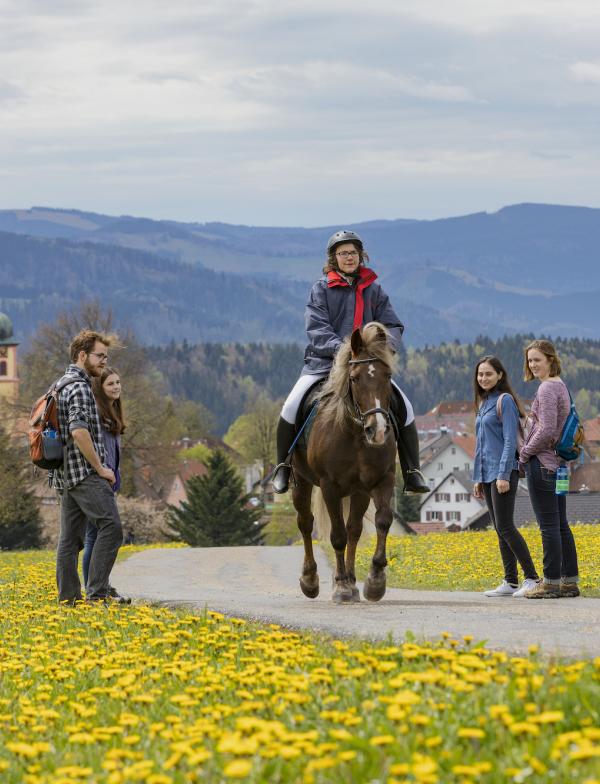
Study the flora and fauna on a series of day trips hiking through this famous forest, located just outside of Freiburg.
Vosges Mountains
2 Days ($)
Fall & Spring
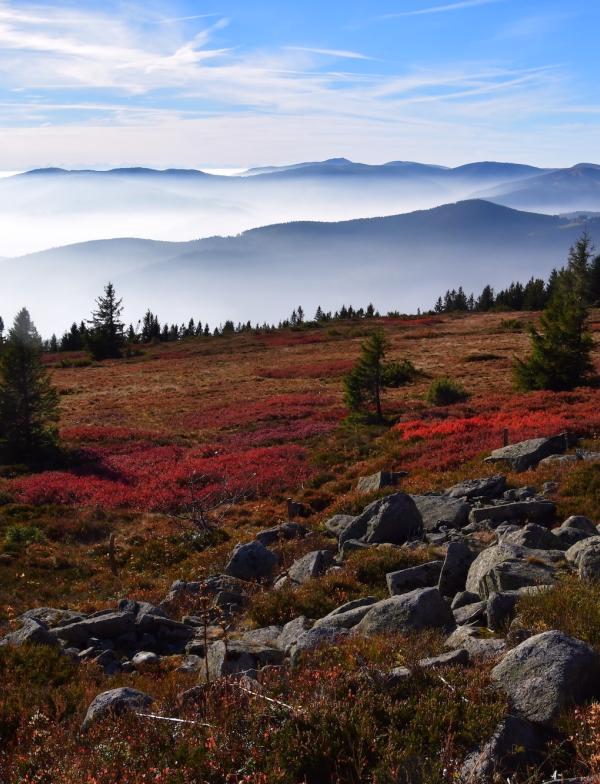
Travel to France and explore the Vosges Mountains. Hike up and down haut Vosges, enjoy fantastic views of the Rhine River valley, and try out the real pain au chocolate. You'll stay overnight in an alpine hut and dine on delicious Alsatian food and wine.
Swiss Alps
3 Days
Fall & Spring
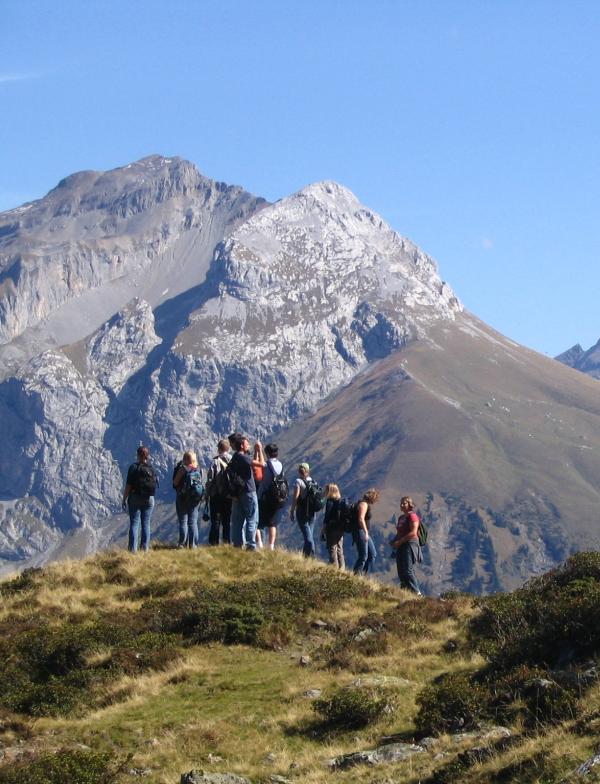
Hike through the Swiss Alps as you study forest management, forest education, climate, regional climate, and the impact on vegetation.

Wadden Sea
7 Days
Fall & Spring
Students enrolled in BL/ES 370 - The Wadden Sea: Intertidal Ecosystems will take a one-week field study to the Wadden Sea to the north of Germany to apply their knowledge hands-on.
Program Cost
Consider these prices as a starting point. We encourage you to contact your current college or university to determine the actual cost to you when factoring in financial aid, scholarships, your school's policies, and other factors.
Fall 2026
Academic Year 2026-2027
Spring 2027
APPLY FOR SCHOLARSHIPS
$7.9 Million in Scholarships & Aid
We firmly believe that financial limitations should not prevent a qualified student from studying abroad. This is why we commit millions of dollars to our study abroad scholarships and aid.
Orientation
Health & Safety
With 75 years of experience, we are proud to set the standard for health and safety in study abroad. Our Chicago-based and on-site staff are all highly trained and experienced in the matters of health, safety, and crisis management. We are here for you from predeparture to your return, and are ready to support you—no matter which time zone you’re in. We plan for "what ifs" so that you don’t have to. From international health insurance included in your program cost to highly trained local staff who can connect you with English-speaking healthcare providers, we work around the clock to ensure your health and safety while abroad.
PRO-TIP
Apply for your passport today!
Getting your passport is a crucial step for studying abroad. With processing times taking longer than usual, consider this a gentle reminder to not procrastinate on getting or renewing your passport.

Frequently Asked Questions
Identity Resources
Contact a Previous Student
Student Ambassadors
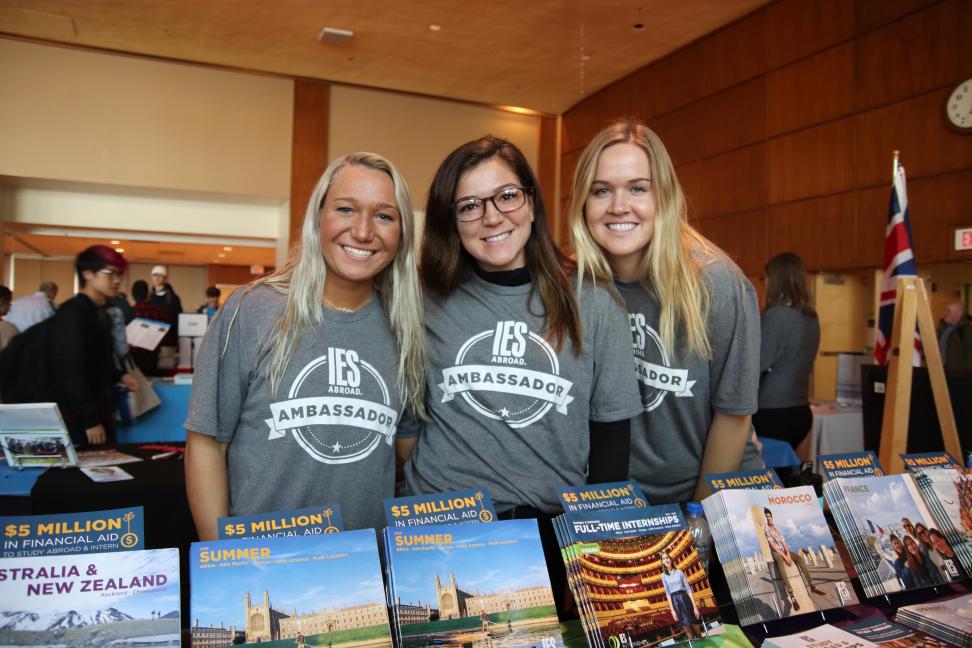
No one knows the IES Abroad experience better than a student who has lived it! From budget tips to housing experiences, our volunteer Ambassadors are here to share it all.
Related Programs



Study Abroad

Study Abroad

Study Abroad

Study Abroad

The Student Experience


La Mercè 2026: Experiencing Barcelona’s Biggest Celebration
From human towers and fire-filled streets to an amazing drone show, La Mercè was one of my favorite ways to experience Catalan culture and feel more connected...

Granada: To and Fro
Traveling to and from Granada is easy, but as someone who was scared it wouldn't be so simple at first, here's my experience and some tips and tricks.

Strange Sights in Madrid
Nathan ranks strange places he has encountered in Madrid by their off-putting vibes and connects with them in a way unique to humans.
How will study abroad redefine your world? We can’t wait to find out.