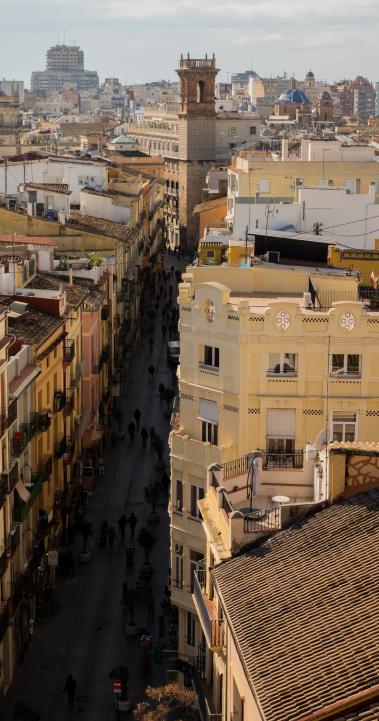
We dare you to get bored in Madrid—you can wander around the Plaza Mayor, visit the city’s many churches and cathedrals, enjoy the sunshine in one of Madrid’s many parks, see a Flamenco show, watch a Real Madrid soccer game, taste the city’s unique cuisine—should we go on? Not only is Madrid the capital city of Spain, it’s also the heart of the country. Located in the center of Spain, Madrid is a great starting point to explore this gorgeously diverse country. Have you packed your bags yet?
Madrid is a vibrant, cosmopolitan city of approximately 4 million people. The student population is significant. Roughly 90,000 students attend the Universidad Complutense de Madrid alone!
The energetic ambiance of Madrid is not limited to university students, however; people of all ages contribute to the cultural community of Madrid. Theater productions, concerts of all kinds, and dance performances abound in the city as do bars, cafés, restaurants, and discotecas.
Long-prized elements of Madrid’s cultural tapestry include performances at the Auditorio Nacional de Música, concerts by local folk singers, the breathtaking collection of paintings at the Prado and other museums and galleries, and the rastro (flea market) where treasure hunting is a must.
Much of Madrid's social life takes place on the streets. Friends will often meet to dar un paseo (take a walk) or tomar un café (have a coffee) at a local bar. People sit for hours over one cup of coffee in a café, and dinner at restaurants can last well past midnight—conversation is an art form among Spanish people. Spaniards spend less time at home than Americans, and inviting people over is less common. Madrid is the largest city in Spain, the political capital of the country. The city stands within its own autonomous community called La Comunidad de Madrid, located in the geographical center of the Iberian Peninsula.
Constructed in the 16th century, the Palacio Mayor was built to serve as the home for the King of Spain. However, the current royal family lives outside of Madrid. Each palace room is ornate and decorated with magnificent jewels, chandeliers and statues. The Throne Room is perhaps the most beautifully decorated with statues of lions, ceiling frescos, velvet, and more.
At any hour of the day, the Parque del Retiro guarantees excitement. Street performers, such as jugglers and fortune tellers, entertain crowds. The Museo del Ejercito, located in the Parque, is dedicated to Spain's military history. Christopher Columbus's cross, which he had when he found the New World, is displayed in the museum. In warmer seasons, visitors enjoy boat rides in Retiro's lakes.
One of the hidden treasures in Madrid, the Temple of Debod is an Egyptian structure. The temple was built as a religious site dedicated to the goddess Isis. It remained in Egypt for centuries until 1960 when the Great Dam of Aswan's construction posed a threat to the Temple. In effort to save the ancient monument, Spain volunteered to move the temple to the Parque de Rosales in Madrid.
The construction of this museum was ordered by Carlos III in 1785 to architect Juan de Villanueva. During the reign of Fernando VII in 1819, more than 300 works from the Spanish monarchy were assembled here. Now one of the most important repositories of art in the world, the Prado houses more than 8,000 paintings. The collection includes the works of El Greco, Velázquez, Goya, Zurbarán, Ribera, Murillo, Bosch, and countless others.
The monument in this popular square commemorates two captains and war heroes, Daoiz and Velarde. The square was the scene of historical events during the War of Independence against France in the early 19th Century and the central arch was the entrance to the Monteleón barracks where the city's defenders rose to arms. Today, the area is surrounded by lively bars, clubs and sidewalk cafes.
Vertical Tabs